Local Name
Datvis sok’o, Dzirbuk’a (1), Bebera-sok’o (kakh.), Beberis sok’o (kakh.), K’riant’eli (rach.), Dedabera (imer.), Dzirbuk’a (z. imer.) (2), Datvis zok’o (tush.) (3), Dedabera (gur., imer., okrib., lechkh.) (4).
Description
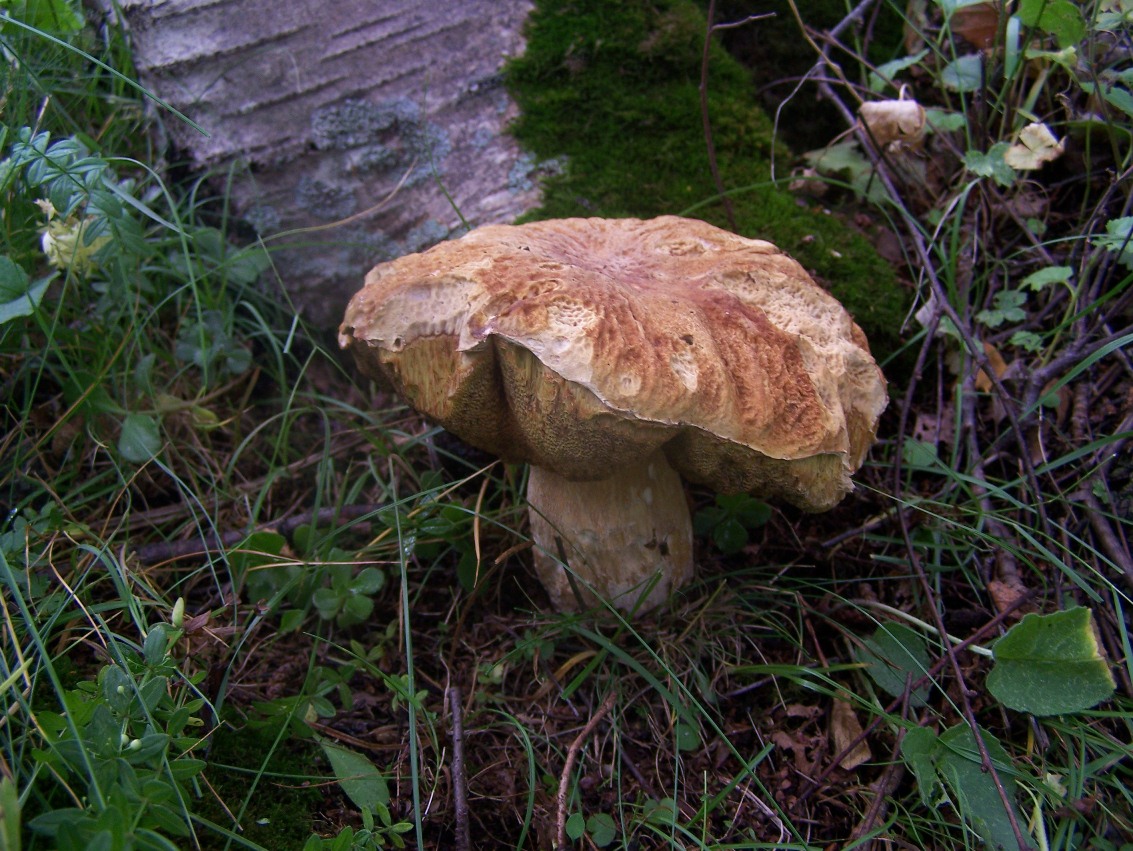
Cap: The cap is 8–30 cm across, brown often with a whitish bloom at first gradually lost on expanding leaving a white line at the margin, smooth and dry initially becoming greasy, in wet weather slightly viscid and polished. Tubes are white, then becoming grey-yellow. Stem: The stem is 8–20 cm tall, 3–6 cm thick, robust, pallid with white net. Flesh: The flesh is white or whitish, unchanging, flushed dirty straw-colour or vinaceous in cap, taste and smell pleasant. Spores: The spores are 14–17 X 4–5 µm, elliptic or spindle-shaped, olivaceous or brownish-yellowish.
Habitat: On soils, coniferous, broad-leaved or mixed woodland. Season: Summer, autumn.
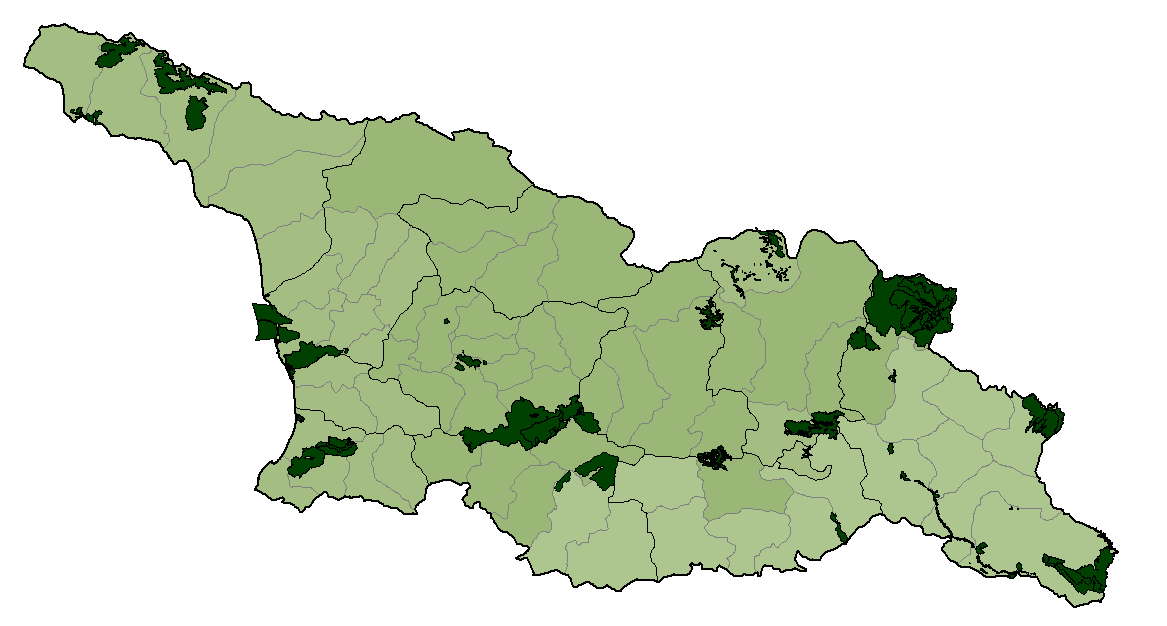
Distribution: All regions of Georgia (5).
Uses
Edibility: Edible when fresh, dry and marinated (1).
Tusheti — “Datvis zok’o is an edible mushroom. Before we started to eat these mushrooms we thought that it was inedible, even poisonous, but it was earlier. When the locals noticed that almost everyone around them eat it, they also started to eat these mushrooms” (3). Racha — “K’rinat’eli is the best mushroom, with brownish-yellowish cap and whitish tubes, also with robust stem” (6).
Note: Almost every mushroom with spongelike hymenophore is called Datvis sok’o or Bebera sok’o.
References
- Nakhutsrishvili, I.G. (2007) Fungi of Georgia. Tbilisi: Buneba Printi.
- Makashvili, A. (1991) Botanical Dictionary. Tbilisi: Metsniereba.
- Tsotsanidze, G. (2012) Tushetian dictionary. Tbilisi: Bakur Sulakauri Publishing.
- Ghlonti, A. (1974) Dictionary of the Georgian Dialects. Vol. I. Tbilisi: Ganatleba.
- Nakhutsrishvili, I.G., et al. (1986) Flora of Spore-producing Plants of Georgia (Summary). Tbilisi: Metsniereba (Russian).
- Kobakhidze, A. (1987) Dictionary of the Rachan Dialect. Tbilisi: Metsniereba.