Local Name
Shavi pshuk’una (1), K’usk’usela, Datvis kachkacha (mokh.), Burnuta (kakh.), Tsuana sok’o (imer.), Gudapshuk’a (gur.), Dzilguda, Q’ovt-Satsuara (pshav.), Eshmak’is burnuti (kart.), Gudapshut’a (lechkh.), T’urashi rsini, Lurishguda (meg.), Malatus (svan.) (2), Satsuarai (tush.) (3), K’usk’usela, K’usk’usa (mokh.), Datvis kachkacha, Q’ovis Sachuara (mtiul.), Q’vavt k’usa (khevs.), Q’vavt q’veli (tush.) (4), Mchuana, Dzilguda, Pshok’ura, Gudapshut’a, (rach.) (5), Gvelapshut’a (z. imer.) (6), K’ok’oshol, Mavla Tus (svan.) (7).
Description
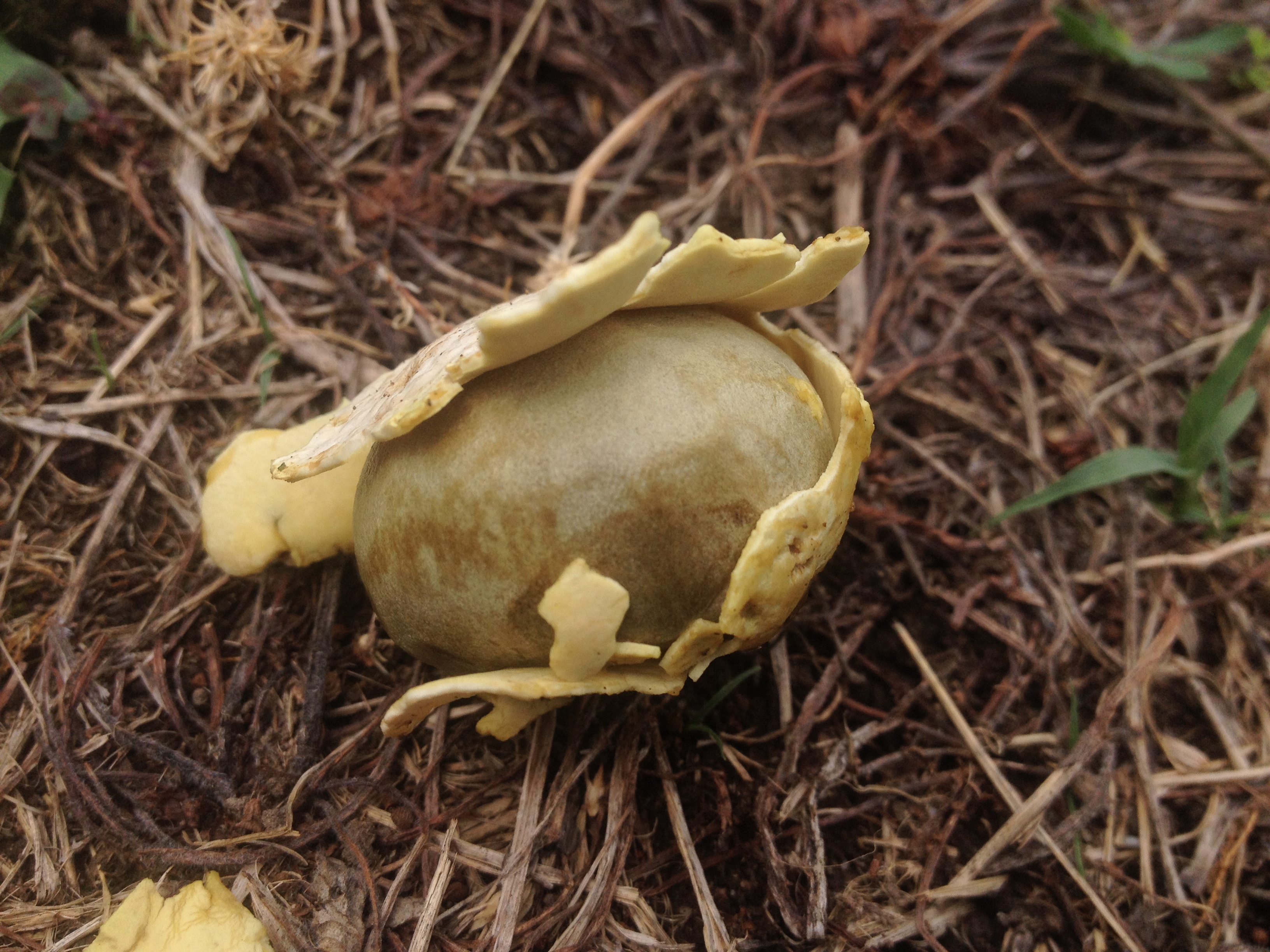
Fruit body: The fruitbody is 2–8 cm across, subglobose, slightly pointed below, without a sterile base but attached to the substrate by a single mycelial cord which often breaks leaving the fruit body free to roll about in the wind, outer wall white at first, flaking off in large scales at maturity to expose the dark purple-brown to blackish inner wall enclosing the spore mass and opening by a large irregular pore or extensive splitting and cracking. Gleba dark purple-brown. Spores: The spores are 5 X 6 µm, broadly ellipsoid to subglobose, brownish-reddish-purple.
Habitat: Mainly in grass and pastureland. Season: Summer, autumn.
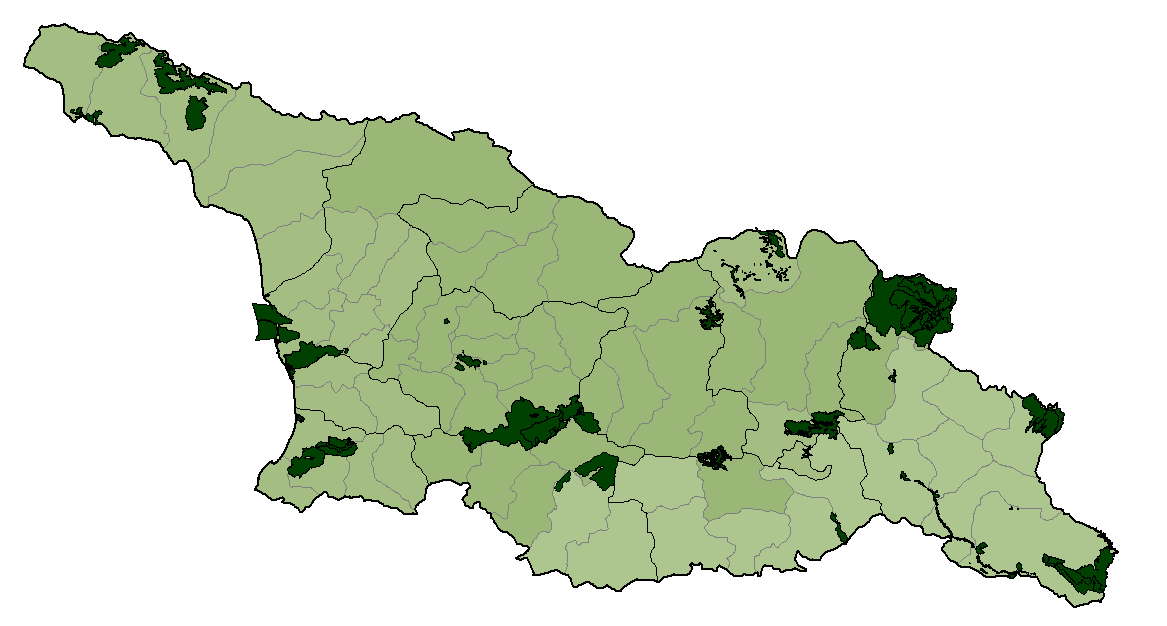
Distribution: All regions of Georgia (8).
Uses
Edibility: Edible when young and fresh (1).
Tusheti — “Satsuara fungi often used for the treatment of the sheep ulcers” (3). Racha — “Dzilguda is a small and roundish fungi and can be often found in pasturelands, it’s blackish when mature” (5). Imereti — “The fungi were used to stop bleeding by pouring the contents of the fruit-bodies onto wounds” (6). Guria — “Gudapshuk’a is the name of a small fungi, which is often used for the cicatrize of wounds” (9). Svaneti — “These fungi are often found in autumn, whitish and small in size, when they’re dried their content become as the black dust” (7), “Malatus fungi are often found in grassy areas, they are white at first, then become blackish. Malatus is edible when young and fresh” (10), “Malatus must become blackish from outside, we gather them to store for the winter, it is often used for the termination of bleeding and for the treatment of the pus” (12). Khevi — “K’usk’usela, Putkura sok’o — very tasty fungi” (11).
Note: Locals often can’t see difference between the most parts of Bovista and Lycoperdon representatives, and they use the same name for the fungi from both species.
References
- Nakhutsrishvili, I.G. (2007) Fungi of Georgia. Tbilisi: Buneba Printi.
- Makashvili, A. (1991) Botanical Dictionary. Tbilisi: Metsniereba.
- Tsotsanidze, G. (2012) Tushetian dictionary. Tbilisi: Bakur Sulakauri Publishing.
- Shanidze, A. (1984) Georgian mountain dialects. Collected Works in 12 Volumes. Vol. I. Academy of Sciences of the Georgian SSR. Tbilisi State University. Tbilisi: Metsniereba.
- Kobakhidze, A. (1987) Dictionary of the Rachan Dialect. Tbilisi: Metsniereba.
- Ghlonti, A. (1974) Dictionary of the Georgian Dialects. Vol. I. Tbilisi: Ganatleba.
- Liparteliani, Aslan (1994) Svan-Georgian dictionary. Cholur dialect. Tbilisi.
- Nakhutsrishvili, I.G., et al. (1986) Flora of Spore-producing Plants of Georgia (Summary). Tbilisi: Metsniereba (Russian).
- Zhghenti, S. (1936) Gurian dialect. Tiflis: Publishing House of the Georgian Branch of the Academy of Sciences of the USSR.
- Oniani, A. (1917) Collection of Svanetian Names of Trees and Shrubs (on Lashkhuri Dialect), Materials on Japhetic linguistics. Vol. VIII. Petrograd: Academy of Sciences Press.
- Ghudushauri, I. (2011) Mokhevian dialect dictionary. Tbilisi.
- Gujejiani, Ch. (2014) Mestia.