Local Name
Gardamrida, Q’ura sok’o (1), Q’urch’at’a (gur.) (1), K’atsisq’ura (2).
Description
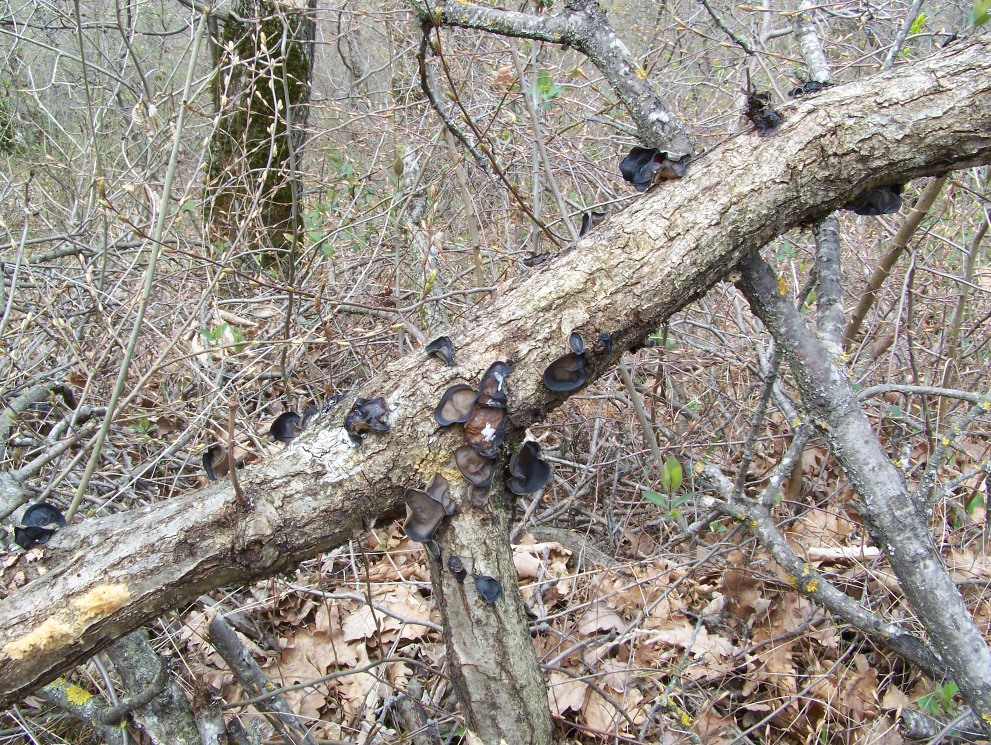
Fruitbody: The Fruitbody is wavy and irregular, typically ear-shaped, 3–15 cm, gathered together and attached at a central or lateral position, fertile surface (usually the “downward” one) gelatinous, tan to brown, sterile surface (usually the “upper” one) silky to downy, veined, irregular, brown, flesh thin, gelatinous-rubbery. Flesh: The flesh is waxlike, hyaloid when fresh, then parchmentlike when dry. Spores: The spores are 12–19 x 4–8 µm, elliptic, smooth.
Habitat: On branches of deciduous living or dead trees, usually on elder ones, especially on elder (Sambucus nigra) and alder-tree. Season: Summer, autumn.
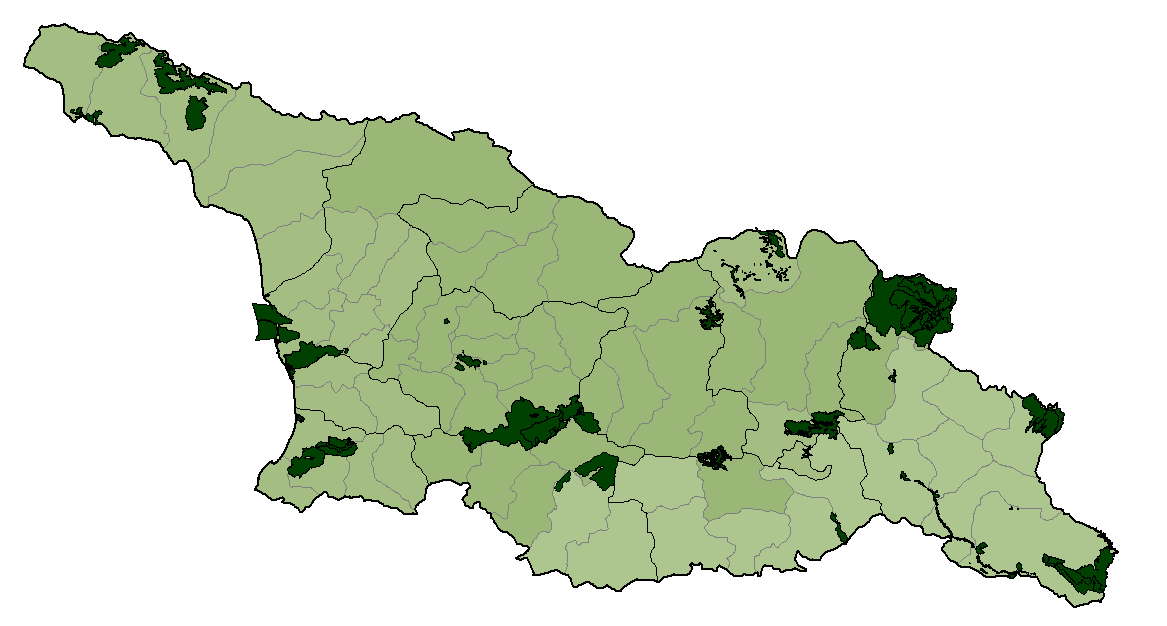
Distribution: All regions of Georgia (3).
Uses
Edibility: Edible when young and fresh (2).
Guria — “Q’urch’at’ai is the name of an edible fungi” (4). Adjara — “Q’urch’at’ai grows on trees, it’s tinderlike, we don’t eat them” (5).
References
- Makashvili, A. (1991) Botanical Dictionary. Tbilisi: Metsniereba.
- Nakhutsrishvili, I.G. (2007) Fungi of Georgia. Tbilisi: Buneba Printi.
- Nakhutsrishvili, I.G., et al. (1986) Flora of Spore-producing Plants of Georgia (Summary). Tbilisi: Metsniereba (Russian).
- Zhghenti, S. (1936) Gurian Dialect. Tbilisi: Publishing House of Georgian Branch of Academy of Sciences of the USSR.
- Kvikhaidze, E. (2016) Vlg. Riketi, Khulo.