Local Name
Mch’ada (1), Mch’adio, Mch’ado, Ch’ado (imer.), (2), Mch’ada (kiz.) (3), Ch’ado (rach.) (4), Mach’k’idia (meg.) (5), Sok’omch’ada (gur.) (6), Ch’ada-Ch’adai (gur.), Ch’adobai (z. adjar.) (7), Ch’aduai (svan.) (8), Guz (svan.) (9).
Description
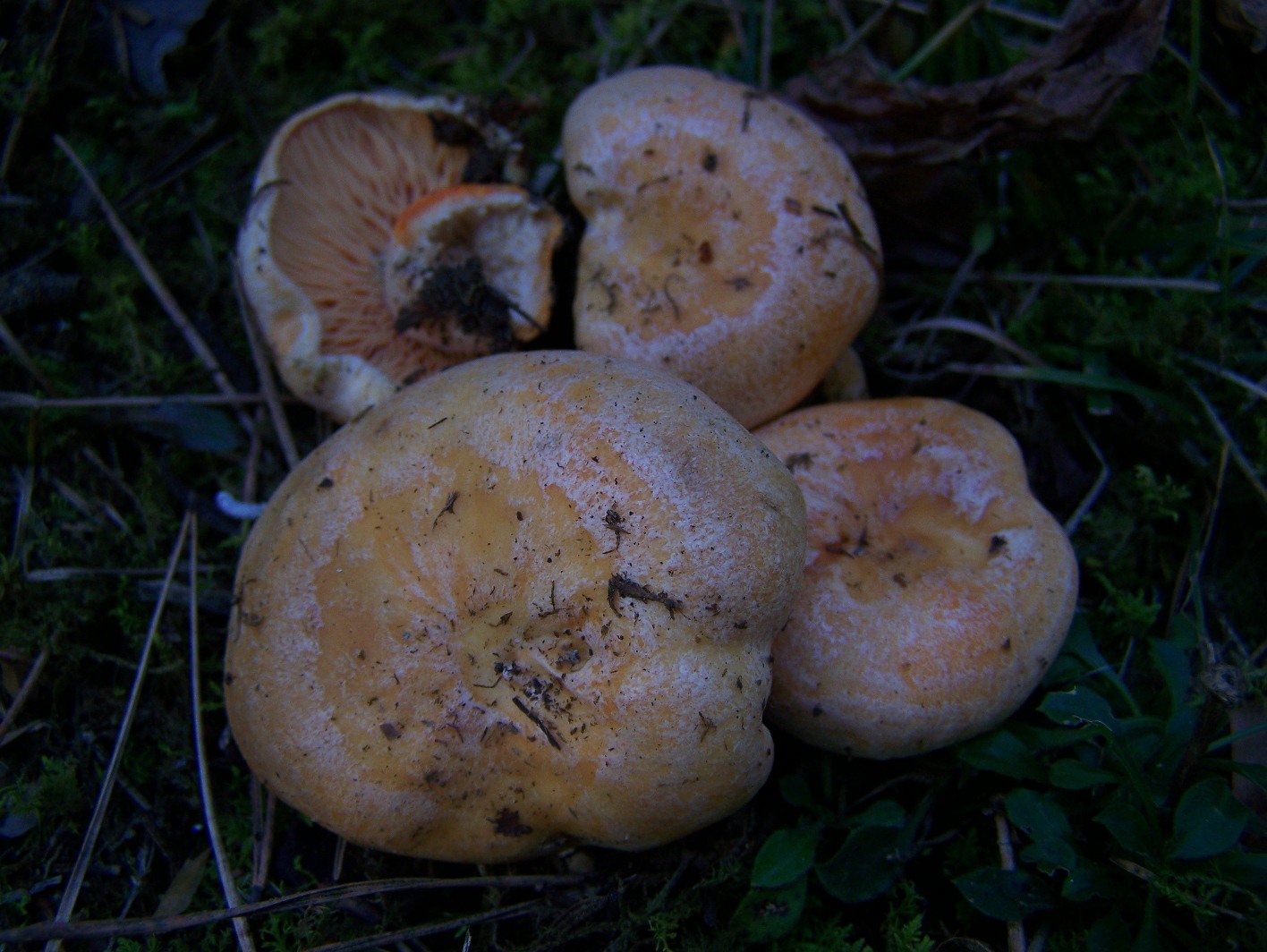
Cap: The cap is 5–17 cm broad, convex, becoming centrally depressed and vase-shaped, margin incurved, sometimes upturned in age, surface viscid when moist, color variable: various shades of orange and green arranged in concentric zones, orange often fading, while green tones continue to develop, predominating at maturity. Gills are close, orange, greenish in age, bleeding an orange latex that stains green. Stem: The stem is 4–6 cm tall, 1–2 cm thick, equal to sometimes tapered at the base, orange, dry, occasionally with flattened pits, bruising and staining green with age, veil absent. Flesh: The flesh is yellowish-orange, when cut yielding an orange latex soon turning green, taste, slightly bitter. Spores: The spores are 7–9 X 6–8 µm, broadly elliptical, with amyloid reticulations. Spore print creamy-buff.
Habitat: On soils, in open places, in mixed coniferous forests. Season: Summer, autumn.
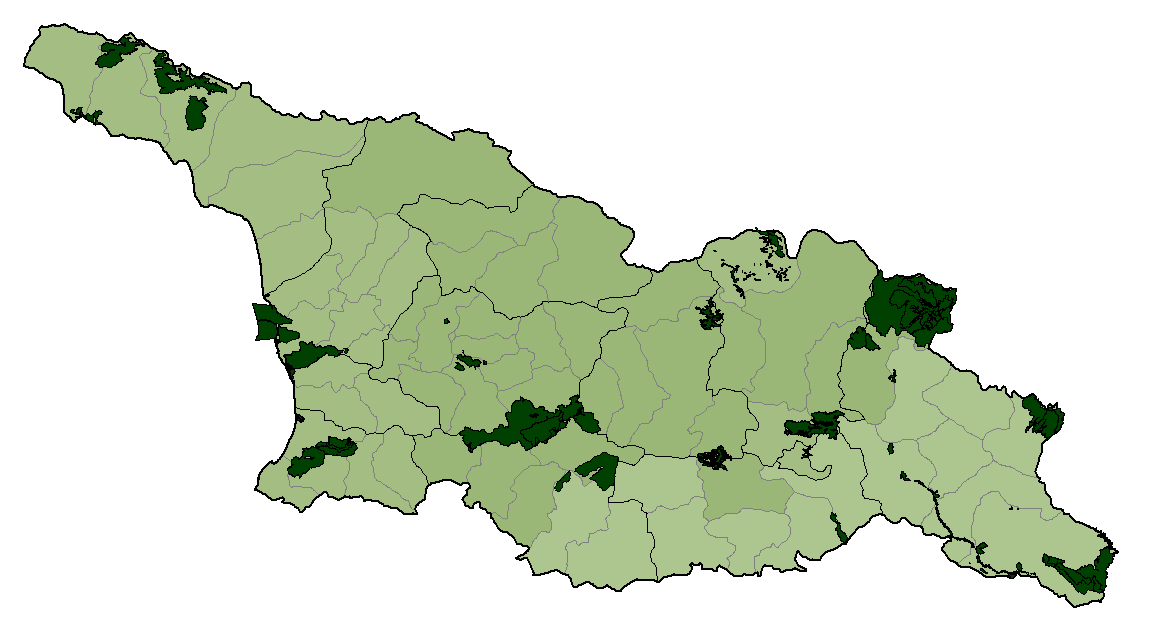
Distribution: All regions of Georgia (10).
Uses
Edibility: They are considered one of the best of the edible fungi, usually when they are fresh and suitable also marinated (1).
Racha — “This is an edible mushroom, with brown cap and stem, also with milklike juice when sliced. Ch’ado we eat even uncooked” (4), “We gather Ch’ado and dry them to store for the winter” (11). Guria — “This is a mushroom, it can be eaten even uncooked” (6). Adjara — “This is one of the species of the mushrooms, that can be eaten even uncooked” (7). Svaneti — “This is a red mushroom, it can be eaten when cooked or even uncooked” (8). Kakheti — “Mch’ada sok’o is a brick-red mushroom, it can be eaten even uncooked, very tasty” (12). Tetritskaro — “Mch’ada mushrooms were in a large amount in my childhood. locals were marinating them in a wooden casks” (13).
Note: Locals gather these mushrooms in all regions of Georgia. It’s the only mushroom which can be eaten uncooked.
References
- Nakhutsrishvili, I.G. (2007) Fungi of Georgia. Tbilisi: Buneba Printi.
- Makashvili, A. (1991) Botanical Dictionary. Tbilisi: Metsniereba.
- Menteshashvili, S. (1943) Kizikian Dictionary. Tbilisi.
- Kobakhidze, A. (1987) Dictionary of the Rachan Dialect. Tbilisi: Metsniereba.
- Kobalia, A. (2010) Megrelian Dictionary. Tbilisi: Artanuji Publishing.
- Sharashidze, G. (2014) Gurian Dictionary. Tbilisi.
- Ghlonti, A. (1974) Dictionary of the Georgian Dialects. Vol. I. Tbilisi: Ganatleba.
- Oniani, A. (1917) Collection of Svanetian Names of Trees and Shrubs (on Lashkhuri Dialect), Materials on Japhetic linguistics. Vol. VIII. Petrograd: Academy of Sciences Press.
- Topuria, V., Kaldani, M. (2000) Svan Dictionary. Tbilisi.
- Nakhutsrishvili, I.G., et al. (1986) Flora of Spore-producing Plants of Georgia (Summary). Tbilisi: Metsniereba (Russian).
- Melashvili, N. (2014) Vlg. Uravi, Ambrolauri.
- Zaalishvili, D. (2016) Vlg. Sabue, Kvareli.
- Bekauri, T. (2014) Tetritskaro.