Local Name
Arq’a (1), Rdziana-Sok’o (kakh.), Pach’ich’a-Sok’o (kartl., mtiul.), Varq’a-Sok’o (imer.), Sok’o-Impila (gur.), Pirpila (adjar.) (2), Arq’a (rach.) (3), Sok’opirpila (megr.) (4), Sok’opilpilai (gur.) (5), Varq’a (jav.) (6), Arq’ai (svan.) (7).
Description
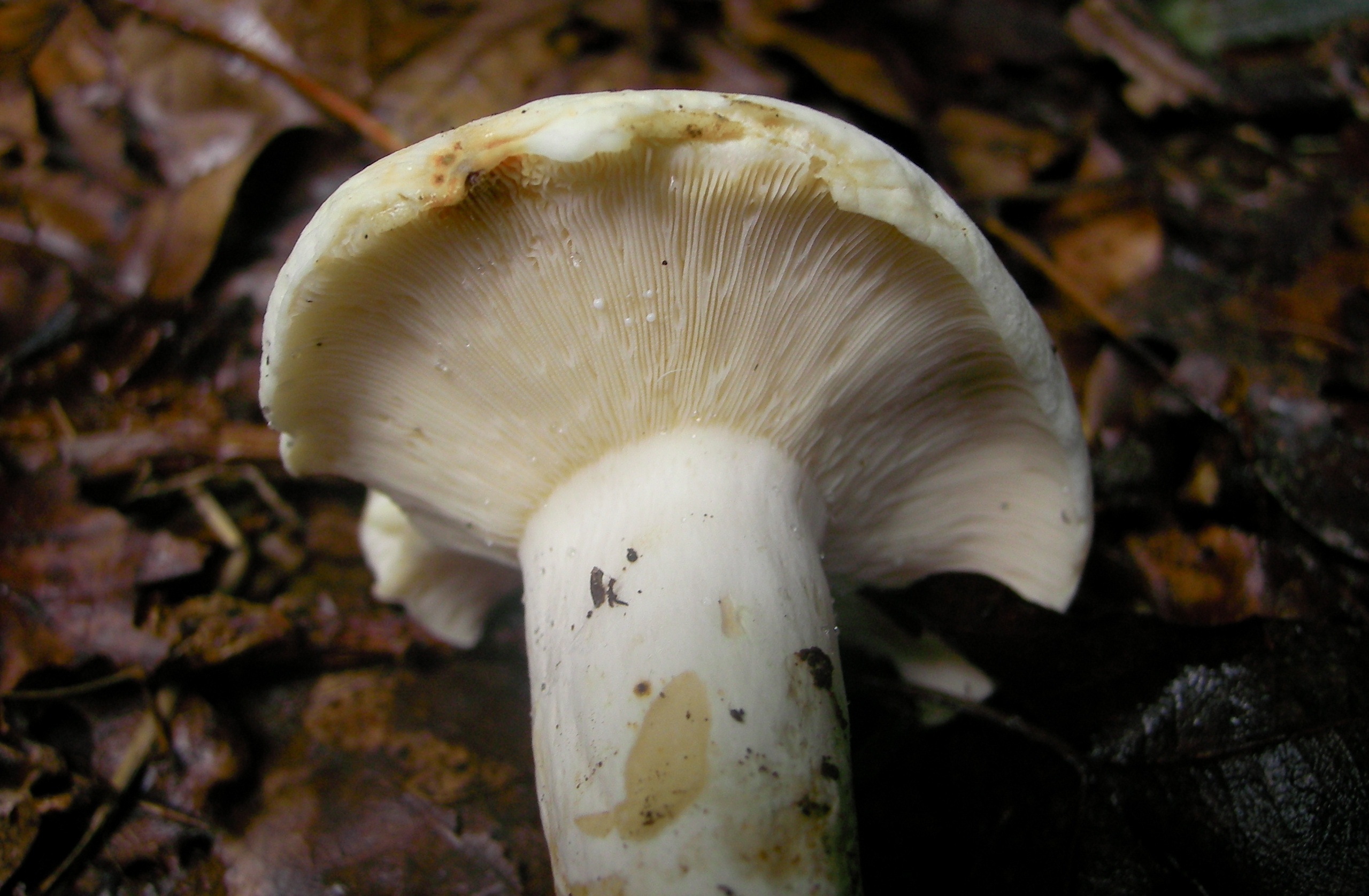
Cap: The cap is 6–18 cm, broadly convex, becoming flat, shallowly depressed, or vase-shaped, dry, the margin even, bald, white or whitish, sometimes discoloring a little yellowish or brownish with age. Gills are attached to the stem or running slightly down it, very crowded, forking frequently, white becoming pale cream. Stem: The stem is 3–7 cm tall, 1–3 cm thick, white, more or less equal, or tapering a little to base, bald, without potholes, solid. Flesh: The flesh is white, thick, hard, sometimes discoloring yellowish with age, odor not distinctive, taste excruciatingly acrid. Milk copious, white, unchanging after exposure, or changing slowly to yellowish. Spores: The spores are 5–10 X 5–8 µm, nearly globose or broadly ellipsoid, with low warts, colourless.
Habitat: On soils, in mixed woodland, both in leafy and coniferous forests, often found at the base of beech trees. Season: Summer, autumn.
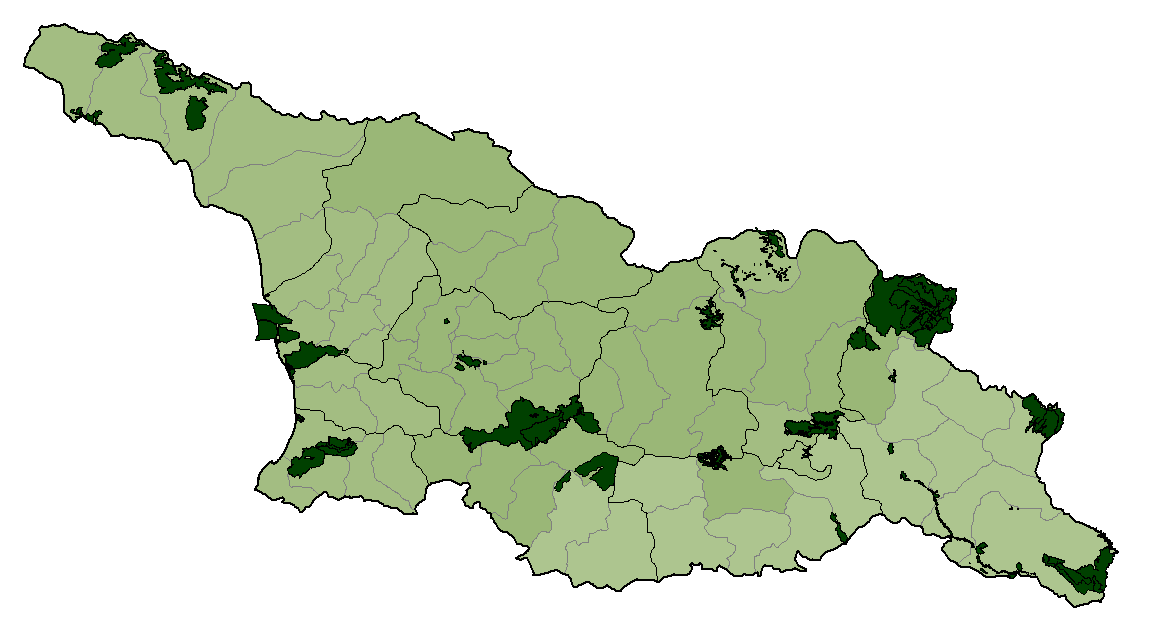
Distribution: All regions of Georgia (8).
Uses
Edibility: Edible when marinated (must be boiled first) (1).
Racha — “Often found on soils, they are whitish-milky and bitterish, we clear, pickle, fry and then eat them” (3), “sometimes found in a large amount, we marinate and store them for the winter” (10). Guria — “This mushroom is bitterish when uncooked, but tasty when cooked” (5). Adjara — “P’irp’ila mushroom is bitterish like black pepper when uncooked, but very tasty when cooked” (9). Svaneti — “This mushroom is white, with whitish-milky juice and poisonous when uncooked, locals determine by the amount of these mushrooms — will be snow in winter or not” (7). Kakheti — “Varq’a mushrooms are very bitter, you must rinse them 5–6 times and then season with vinegar and coriander” (11). Imereti — “There are in a quite large amount Varq’a mushrooms here, in our region, although they are bitter, but when cooked they are good, we often marinate and store them for the winter” (12).
References
- Nakhutsrishvili, I.G. (2007) Fungi of Georgia. Tbilisi: Buneba Printi.
- Makashvili, A. (1991) Botanical Dictionary. Tbilisi: Metsniereba.
- Kobakhidze, A. (1987) Dictionary of the Rachan Dialect. Tbilisi: Metsniereba.
- Kobalia, A. (2010) Megrelian Dictionary. Tbilisi: Artanuji Publishing.
- Sharashidze, G., Tsereteli, B., Alavidze, M. (1938) Lexicon of the Kartvelian languages. Gurian, Zemoimeretian, Lechkhumian Dialects. Tbilisi: Publishing House of Georgian Branch of the Academy of Sciences of the USSR.
- Zedginidze, G. (2014) Javakhian Dictionary. Tbilisi: Saunje.
- Liparteliani, A. (1994) Svan-Georgian dictionary. Cholur dialect. Tbilisi.
- Nakhutsrishvili, I.G., et al. (1986) Flora of Spore-producing Plants of Georgia (Summary). Tbilisi: Metsniereba (Russian).
- Ghlonti, A. (1974) Dictionary of the Georgian Dialects. Vol. I. Tbilisi: Ganatleba.
- Melashvili, N. (2014) Vlg. Uravi, Ambrolauri.
- Brekashvili, L. (2015) Vlg. Zemo Bodbe, Sighnaghi.
- Mirotadze, I. (2016) Chiatura.