Local Name
Gigant’uri pshuk’una (1), Purpashai (tush.) (2), Bat’k’ana (kakh.) (3).
Description
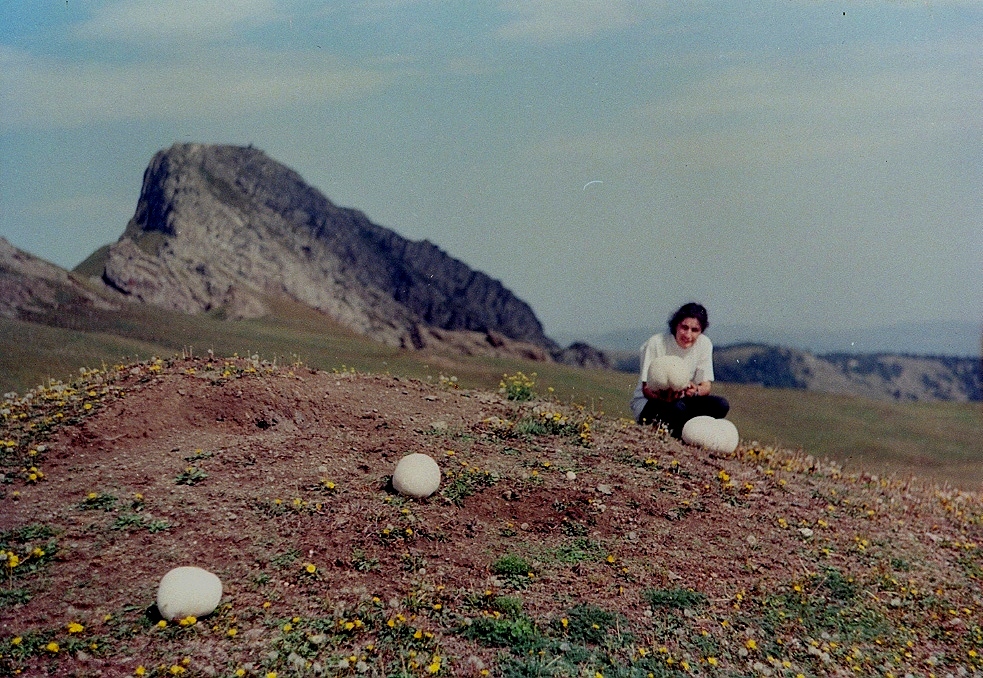
Fruiting Body: Shaped like a ball, or nearly so, up to 50 cm or more across, some of them up to 15 kg, white when fresh, becoming yellowish or olive brown, finely velvety when young, but soon smooth, soft, interior white and fleshy, becoming yellowish or greenish yellow, the outer surface eventually falling away in pieces, often with a small cord at the point of attachment to the ground. Flesh: The flesh is thick and white, rarely discoloring a pinkish wine color in wet weather. Spores: The spores are 3–5.5 X 3–5 µm, round or nearly so, minutely spiny or nearly smooth.
Habitat: Growing in grass often at the edges of meadows, in drainage ditches, or under brush. Season: Summer, autumn.
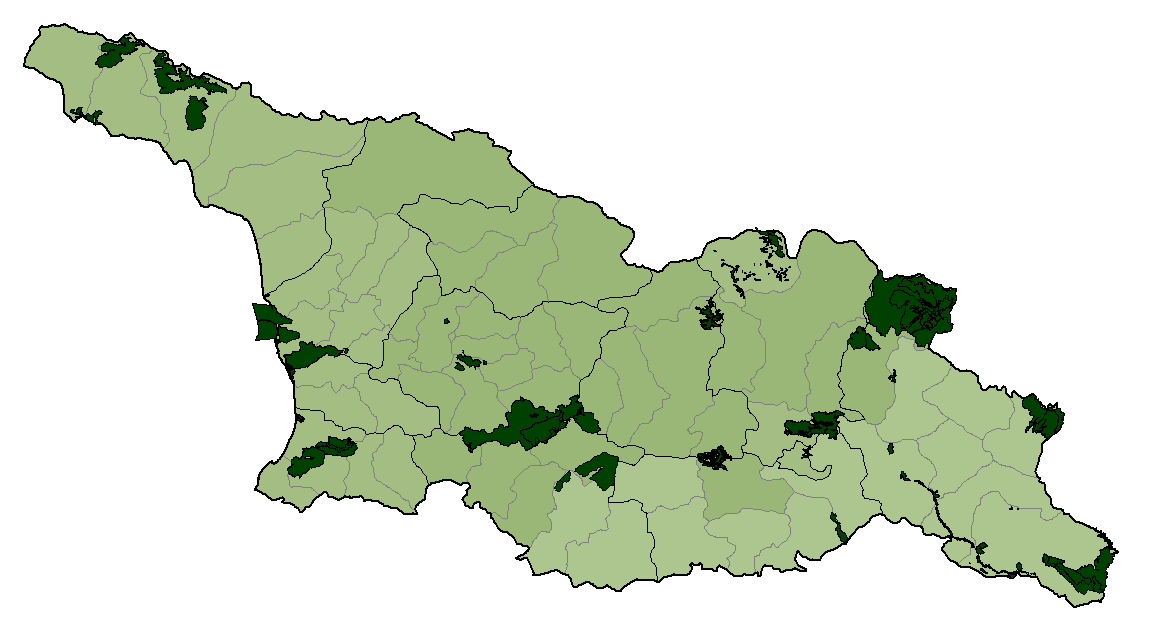
Distribution: All regions of Georgia (3).
Uses
Edibility: Edible when young and fresh, while the flesh is white (1).
Tusheti — “Purpashai is like a stones on the meadows, they are very big, these fungi are also very tasty” (2), “Purpashai is a mountain fungi, very big in size” (2). Kakheti — “There are some big and white fungi, locals call them Bat’k’ana, they’re look like a stones on the meadows” (4), “we call them Bat’k’ana, local shepherds often gather them on the meadows, very big ones, some of them bigger than bucket” (4).
References
- Nakhutsrishvili, I.G. (2007) Fungi of Georgia. Tbilisi: Buneba Printi.
- Tsotsanidze, G. (2012) Tushetian dictionary. Tbilisi: Bakur Sulakauri Publishing.
- Nakhutsrishvili, I.G., et al. (1986) Flora of Spore-producing Plants of Georgia (Summary). Tbilisi: Metsniereba (Russian).
- Gonashvili, B. (2016) Dedoplistskaro.