Local Name
Rbilobts’itela ts’erosts’viva (1).
Description
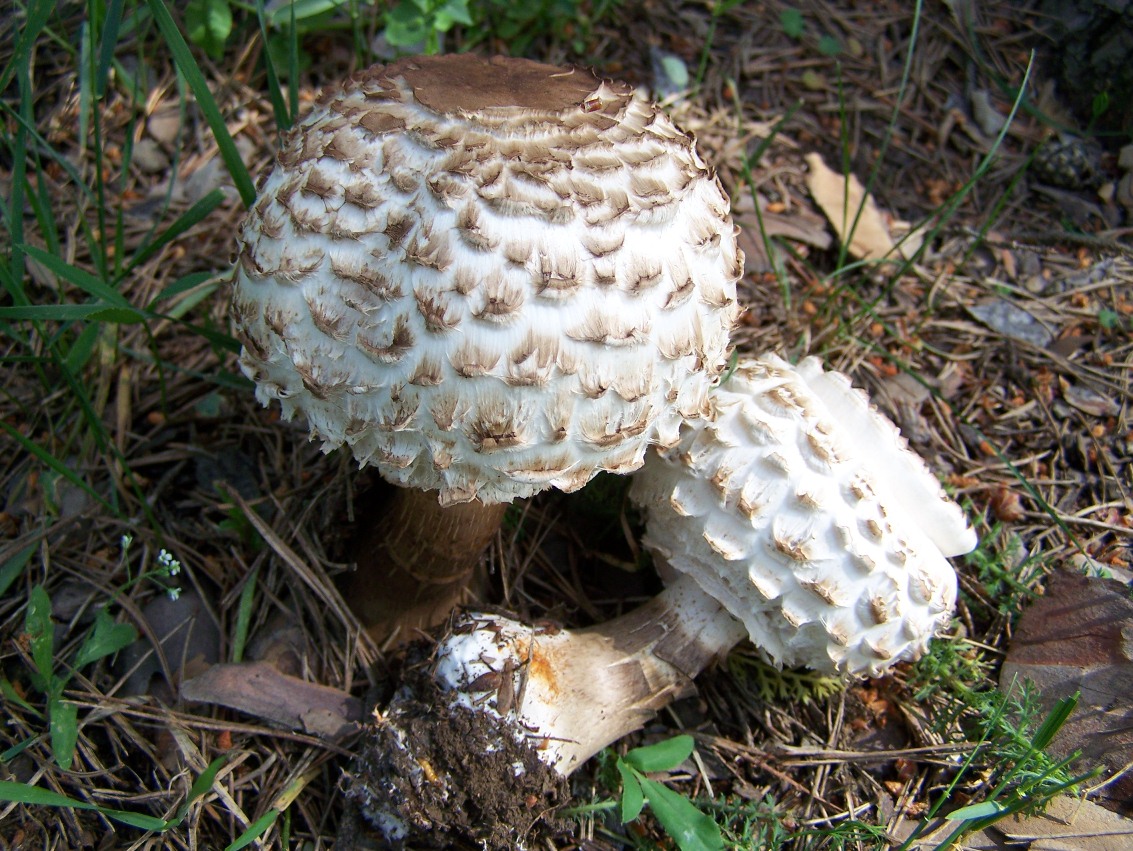
Cap: The cap is 10–15 cm, convex to nearly round when young, becoming broadly convex, flat, or very broadly bell-shaped, dry, soft, bald and grayish brown when in the button stage, but soon breaking up so that the center remains smooth and brown but the rest of the surface consists of shaggy scales with brownish tips over a whitish, fibrillose background. Gills are free from the stem, close or nearly crowded, short-gills frequent, white or, in maturity, pale brownish, often with brownish edges. Stem: The stem is 10–22 cm long, 1–3 cm thick, club-shaped, with a basal bulb that is gradually swollen, bald, whitish above the ring, brownish below, bruising and discoloring brown to brownish, with a high, double-edged, moveable ring that features a brownish edge on the underside. Flesh: The flesh is whitish to pale brownish, staining pinkish orange to reddish, then slowly brownish when sliced (especially near the apex of the stem), thick. Spores: The spores are 8.5–13 X 5–8 µm, elliptical or broadly ellipsoidal to globose or pyriform (pear-shaped), smooth, colourless, white or pale cream.
Habitat: On soils, in mixed woodland, on the edges of forests. Season: Summer, autumn.
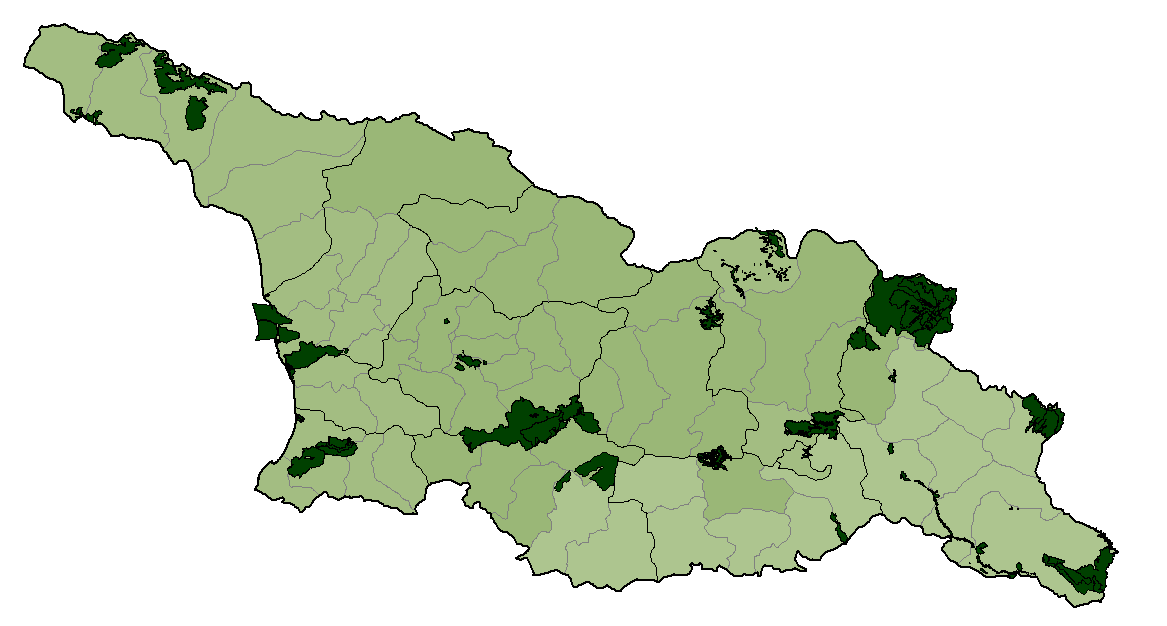
Distribution: All regions of Georgia (2).
Uses
Edibility: Edible when young and fresh (1).
References
- Nakhutsrishvili, I.G. (2007) Fungi of Georgia. Tbilisi: Buneba Printi.
- Nakhutsrishvili, I.G., et al. (1986) Flora of Spore-producing Plants of Georgia (Summary). Tbilisi: Metsniereba (Russian).