Local Name
Shkhamiani kama (1).
Description
Cap: The cap is 6–18 cm across, round to irregularly convex, becoming broadly convex or nearly flat, whitish, or with light brown colorations, especially towards the center, dry, bald, or with scattered fibrils, usually bruising yellow when rubbed, especially near the margin the bruised areas then changing to brownish after some time has elapsed. Gills are free from the stem, white at first, then pinkish, and finally dark chocolate brown, close. Stem: The stem is 5–15 cm tall, 1–3 cm thick, more or less equal, sometimes enlarged at the base, smooth, whitish, bruising yellow, sometimes brownish in age, stuffed or hollowing, with a large, flaring, thick, yellow-staining ring on the upper portion. Flesh: The flesh is white and thick, yellowing when crushed, bright yellow in the base of the stem when sliced. Spores: The spores are 4.5–6 X 3–4.5 µm, elliptical, smooth, and brownish.
Habitat: On soils, in grass and in cultivated areas, occasionally in woods. Season: Summer, autumn.
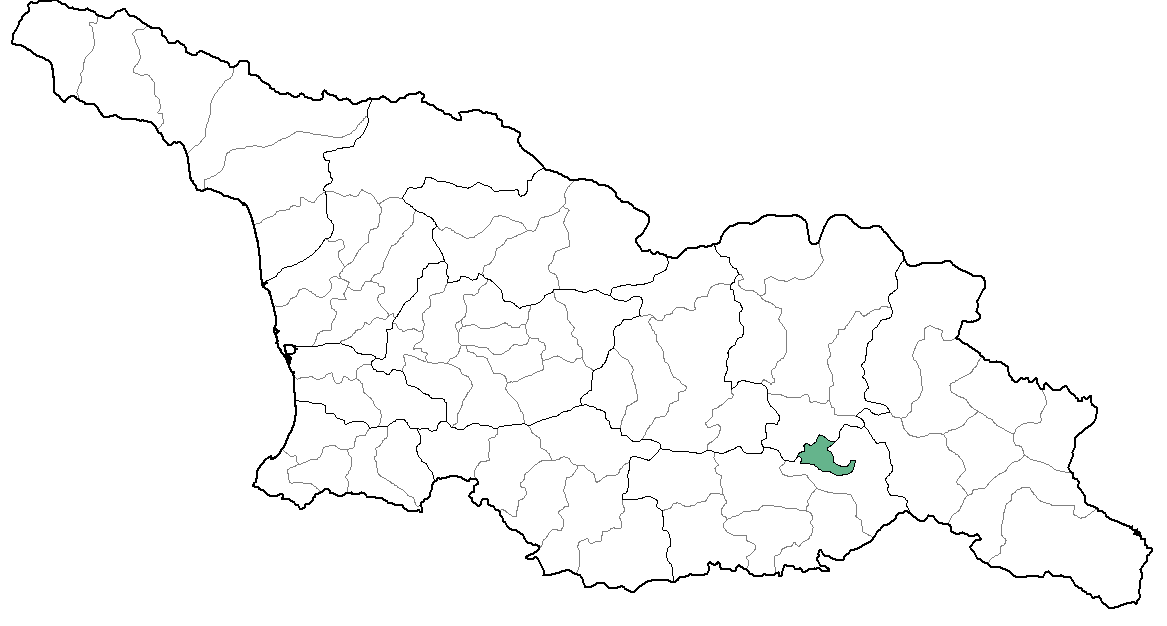
Distribution: Tbilisi (3).
Uses
Edibility: Poisonous. The symptoms are severe stomach cramps (1).
Kakheti — “My father could identify this mushroom by its specific smell” (3).
References
- Nakhutsrishvili, I.G. (2007) Fungi of Georgia. Tbilisi: Buneba Printi.
- Nakhutsrishvili, I.G., et al. (1986) Flora of Spore-producing Plants of Georgia (Summary). Tbilisi: Metsniereba (Russian).
- Gonashvili, B. (2016) Dedoplistskaro.