Local Name
Tskhenisk’bila (1), Kharisk’bila (imer.) (2), Khari k’bilai (svan.) (3).
Description
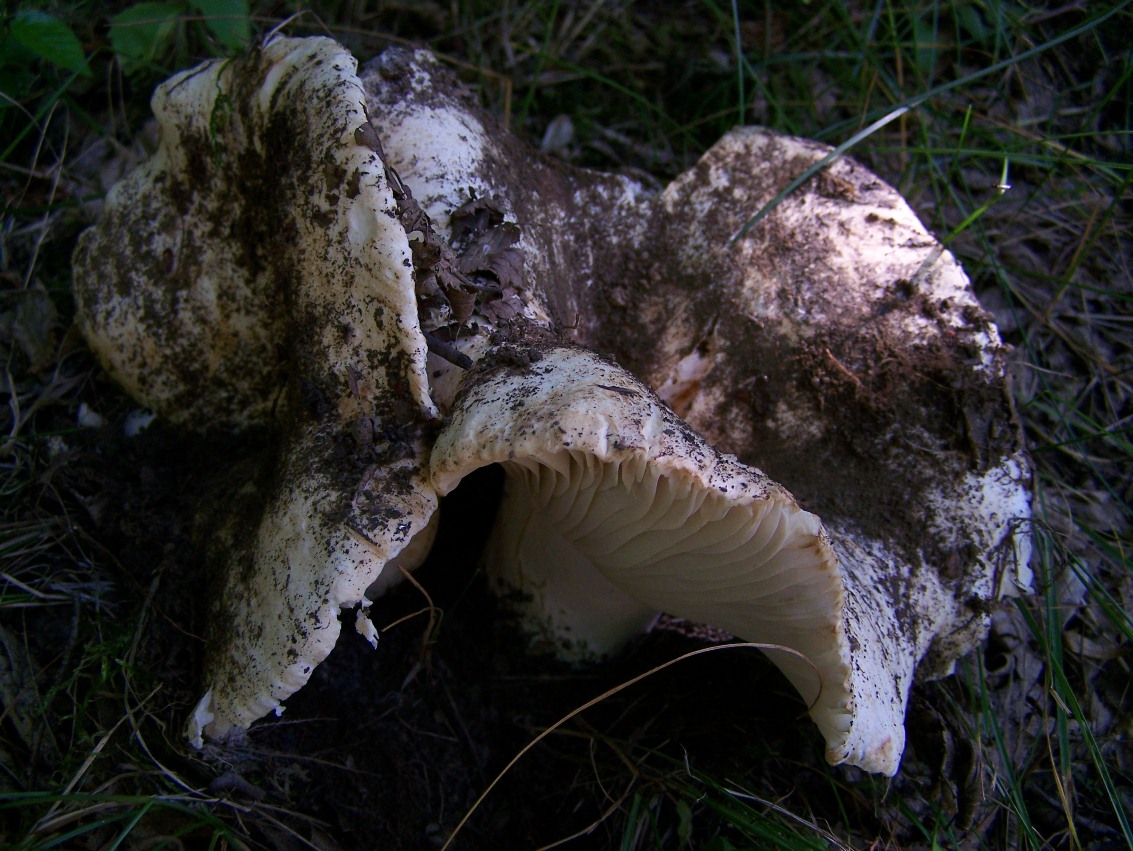
Cap: The cap is 6–20 cm broad, with a deep obtuse depression, dry, finely wrinkled or wrinkled, white then dingy reddish buff. Gills are decurrent, arched, at least as wide as the cap flesh is thick, not very close, whitish to pale cream, edge becoming brown or rufous. Stem: The stem is 2–4 cm tall, 1–3 cm thick, white or whitish, rarely with a greenish tinge under the gills. Flesh: The flesh is white or whitish, flushing slightly rufous, taste mild. Spores: The spores are 8–12 X 7–9 µm, elliptical, with prominent warts.
Habitat: On soils, in mixed woodland, coniferous and leafy forests. Season: Summer, autumn.
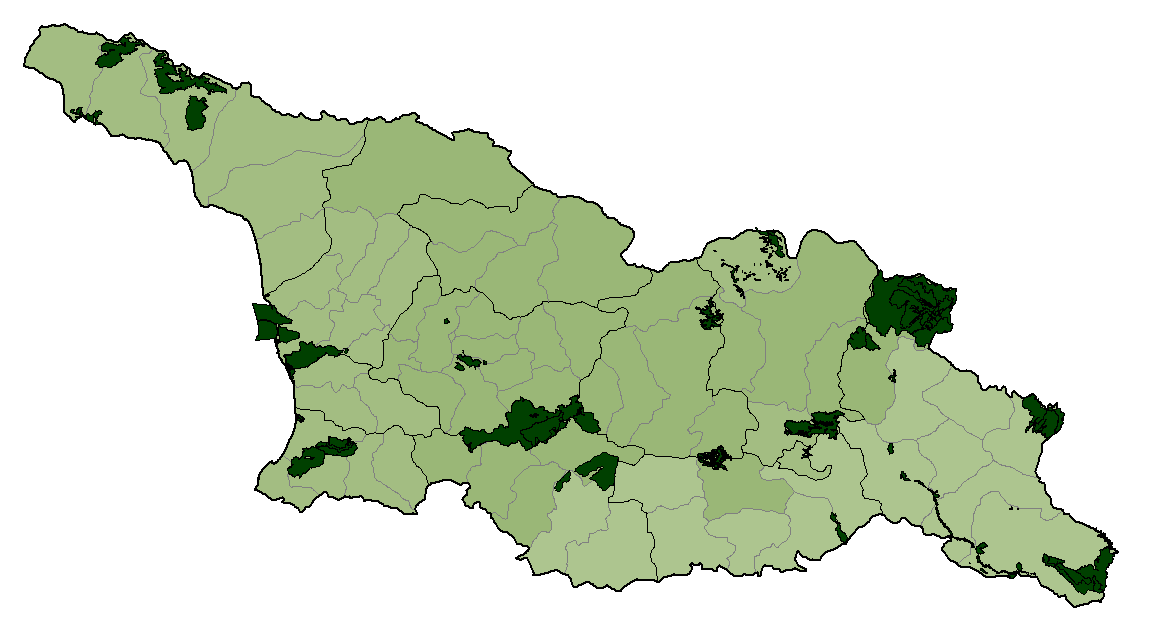
Distribution: All regions of Georgia (4).
Uses
Edibility: Edible when marinated (1).
Svaneti — “Kharis k’bila like Arq’a, edible when cooked” (3).
References
- Nakhutsrishvili, I.G. (2007) Fungi of Georgia. Tbilisi: Buneba Printi.
- Makashvili, A. (1991) Botanical Dictionary. Tbilisi: Metsniereba.
- Oniani, A. (1917) Collection of Svanetian Names of Trees and Shrubs (on Lashkhuri Dialect), Materials on Japhetic linguistics. Vol. VIII. Petrograd: Academy of Sciences Press.
- Nakhutsrishvili, I.G., et al. (1986) Flora of Spore-producing Plants of Georgia (Summary). Tbilisi: Metsniereba (Russian).