Local Name
Ghvinio (1), Ghvinue (lechkh.) (2).
Description
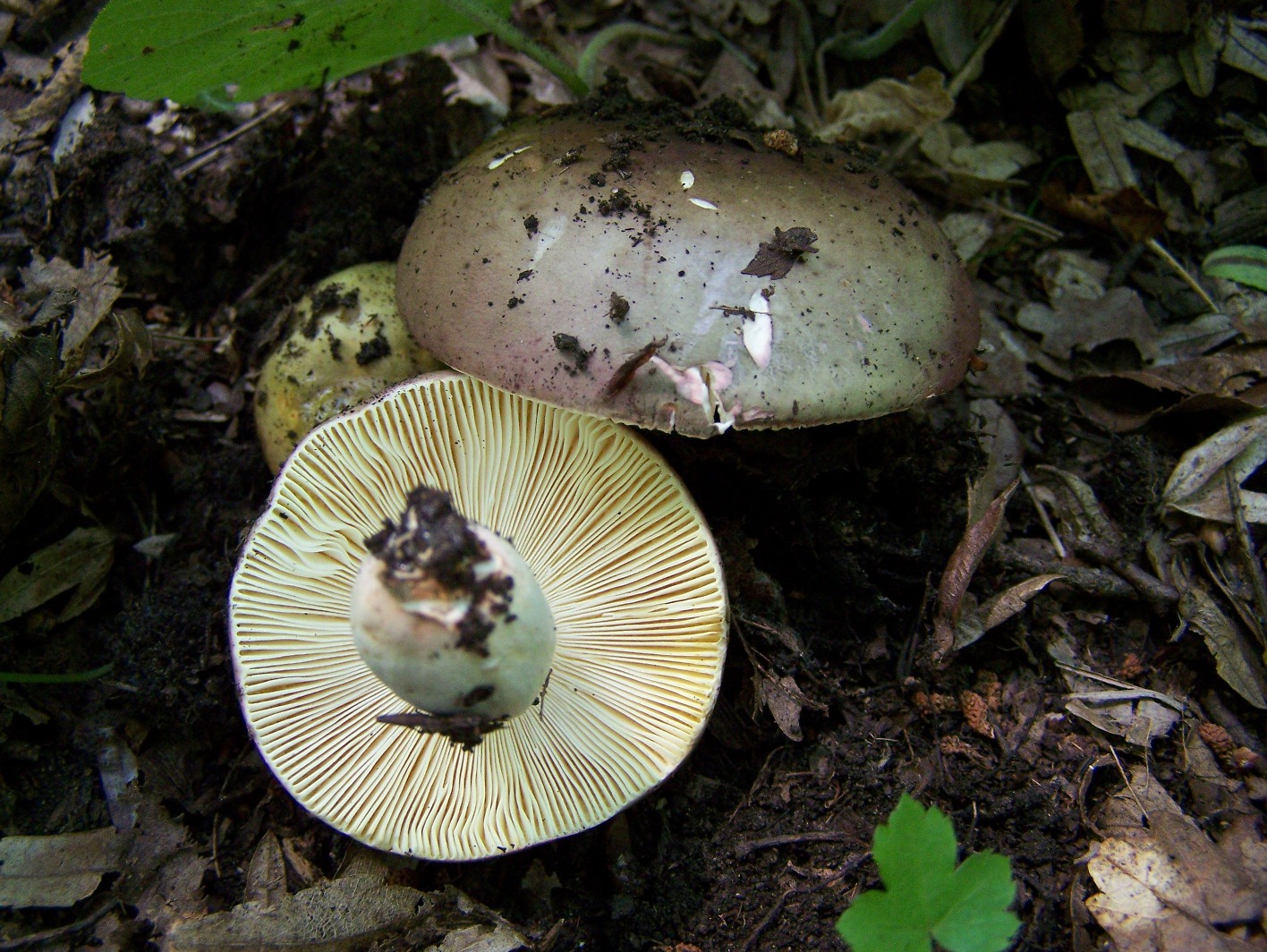
Cap: The cap is 6–12 cm broad, convex when young, becoming broadly convex to flat with a shallow depression, dry or slightly moist, smooth, but often finely veined in radial patterns, pinkish purple to green or olive green or with these and other shades mottled, the margin usually not lined, the skin peeling about halfway to the center. Gills are attached or slightly running down the stem, close or nearly distant, not forking, or forking occasionally, white, when young soft, greasy, and flexible. Stem: The stem is 5–10 cm tall, 1–3 cm thick, white or whitish, but occasionally flushed with lilac, brittle, dry, smooth. Flesh: The flesh is white or whitish, brittle, thick, odor not distinctive, taste mild. Spores: The spores are 6.5–9 X 5.5–7 µm, elliptical, with isolated warts.
Habitat: On soils, in mixed woodland and leafy forests. Season: Summer, autumn.
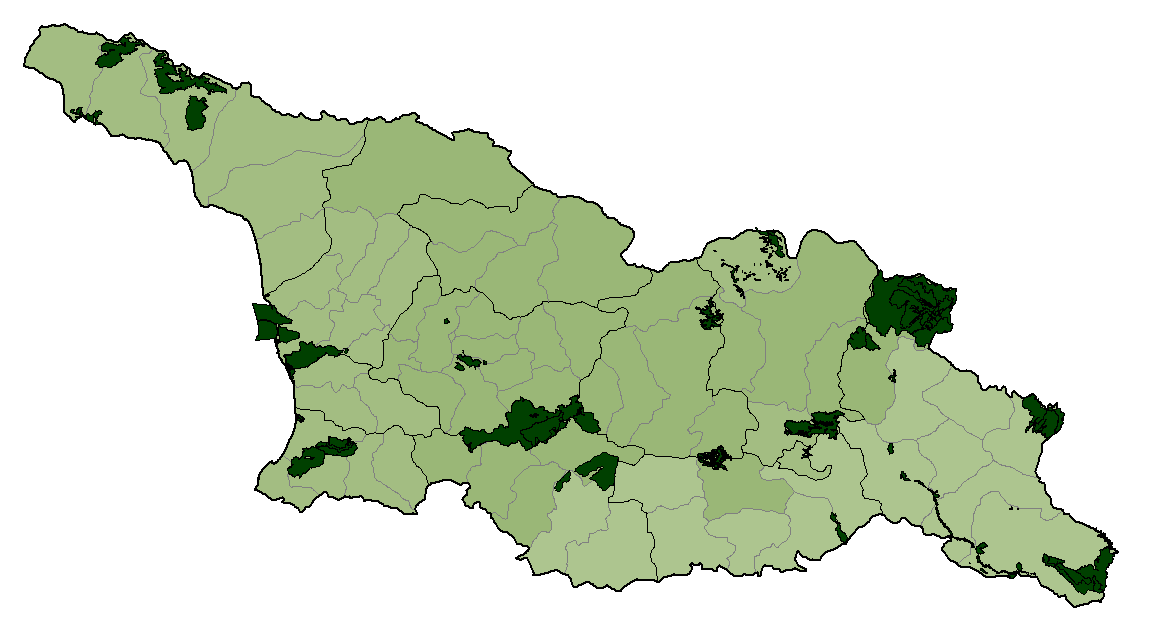
Distribution: All regions of Georgia (3).
Uses
Edibility: Edible when fresh, dry and marinated (1).
Imereti — “We gather Mt’redio, Khakhvilo, Ghvinio and Ts’itlio together and then fry them in oil” (4).
References
- Nakhutsrishvili, I.G. (2007) Fungi of Georgia. Tbilisi: Buneba Printi.
- Ghlonti, A. (1974) Dictionary of the Georgian Dialects. Vol. I. Tbilisi: Ganatleba.
- Nakhutsrishvili, I.G., et al. (1986) Flora of Spore-producing Plants of Georgia (Summary). Tbilisi: Metsniereba (Russian).
- Tsartsidze, N. (2016) Vlg. Sareki, Sachkhere.