Local Name
Ts’itelpekha mukhisdzira (1).
Description
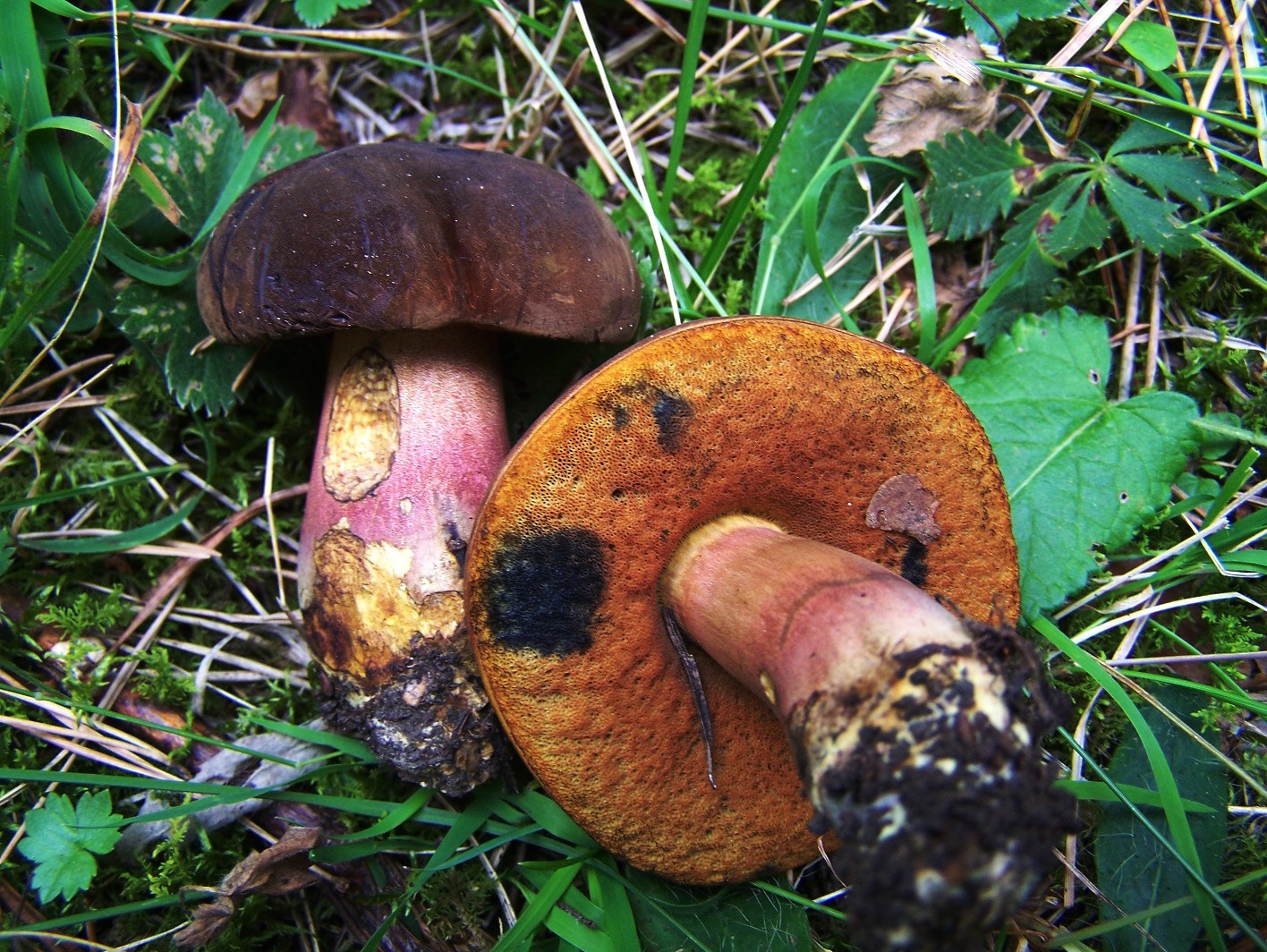
Cap: The cap is 5–18 cm, bay to snuff-brown with olivaceous tints, tending to yellowish ochre towards the margin, slightly velvety at first, soon becoming smooth and sometimes slightly viscid when wet, bruising blue-black. Tubes lemon-yellow then greenish, becoming dark blue on cutting. Pores small, round, orange-red becoming rusty with age, readily bruising dark blue to black. Stem: The stem is 6–14 cm long, 2–5 cm thick, robust, yellowish densely covered in red dots. Flesh: The flesh is yellow, immediately dark blue on cutting, taste and smell not distinctive. Spores: The spores are 11–16 X 4–6 µm, subfusiform, olivaceous snuff-brown, smooth.
Habitat: On soils, in coniferous, broad-leaved and mixed woodland. Season: Summer, autumn.
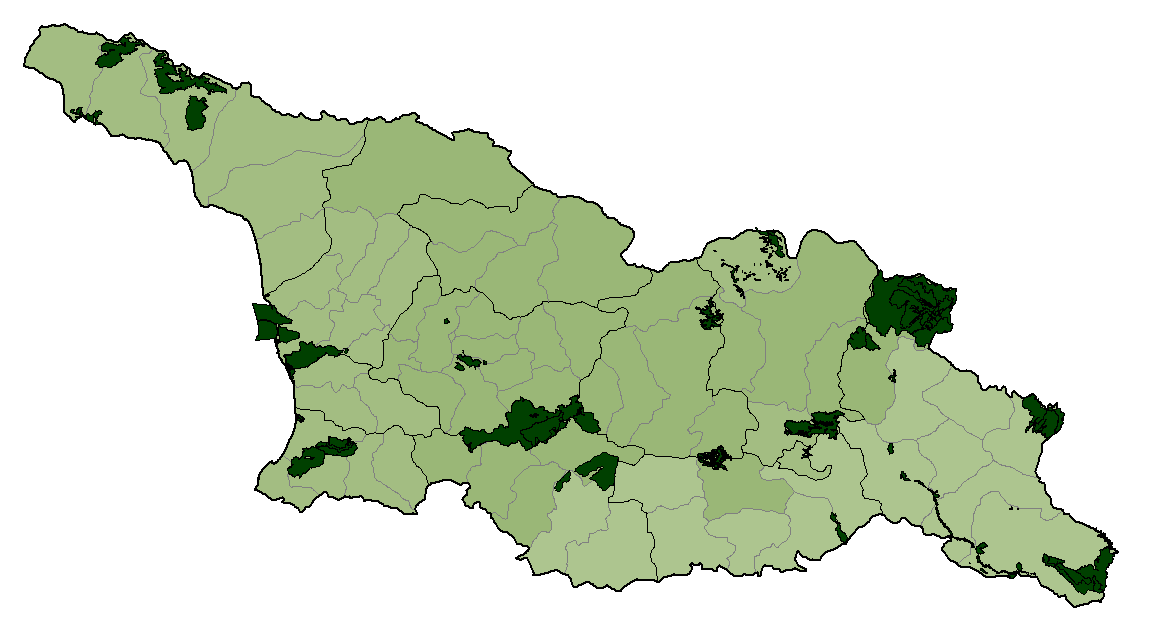
Distribution: All regions of Georgia (2).
Uses
Edibility: Edible only when cooked (must be boiled first in the water for at least 15-20 minutes, broth is unusable) (1).
References
- Nakhutsrishvili, I.G. (2007) Fungi of Georgia. Tbilisi: Buneba Printi.
- Nakhutsrishvili, I.G., et al. (1986) Flora of Spore-producing Plants of Georgia (Summary). Tbilisi: Metsniereba (Russian).