Local Name
Jimla (Ts’k’riala sok’o) (1), Jimlovana (mtiul.) (2), Jimlai (mokh.) (3), Ts’riala (tush.) (4).
Description
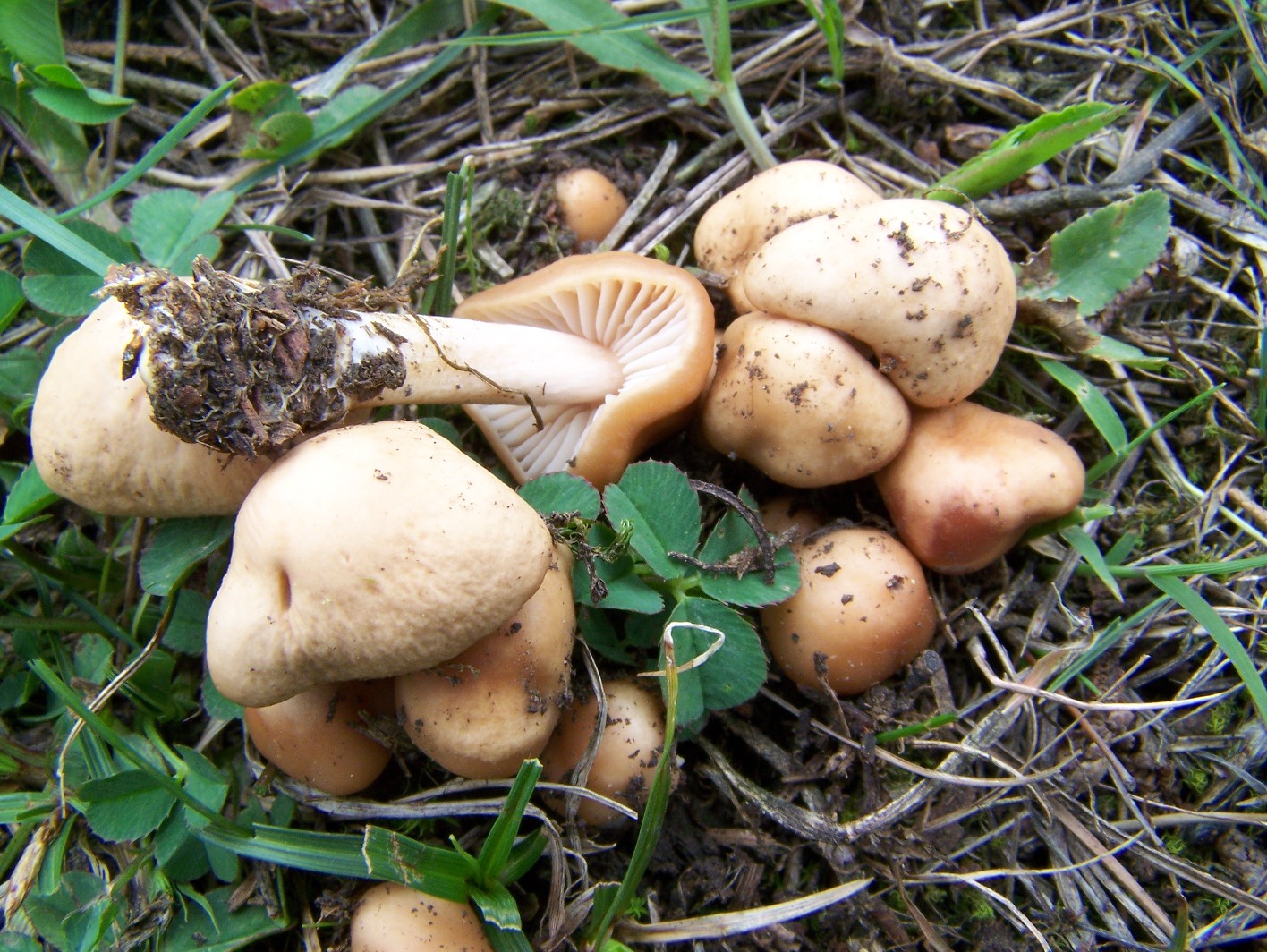
Cap: The cap is 2–5 cm across, bell-shaped with a somewhat inrolled margin at first, becoming broadly convex with an even or uplifted margin, but often retaining a slight central bump, dry, bald, pale tan or buff occasionally white, or reddish tan, usually changing color markedly as it dries out, the margin sometimes faintly lined. Gills are attached to the stem or free from it, nearly distant, white or pale tan. Stem: The stem is 4–10 cm long, 0.2–0.6 cm thick, cylindrical, equal, dry, tough and pliant, whitish or colored like the cap. Flesh: The flesh is thin, pale yellow or whitish, not changing when sliced, sometimes with pleasant almond odor and mild taste. Spores: The spores are 7–10 X 4–6 µm, elliptical or egg-shaped, pure white or colorless.
Habitat: On soils, in gardens, on the roadbeds, paths, on meadows, grasslands, pastures, on the edges of forests and so on, often creates fairy rings. Season: Summer, autumn.
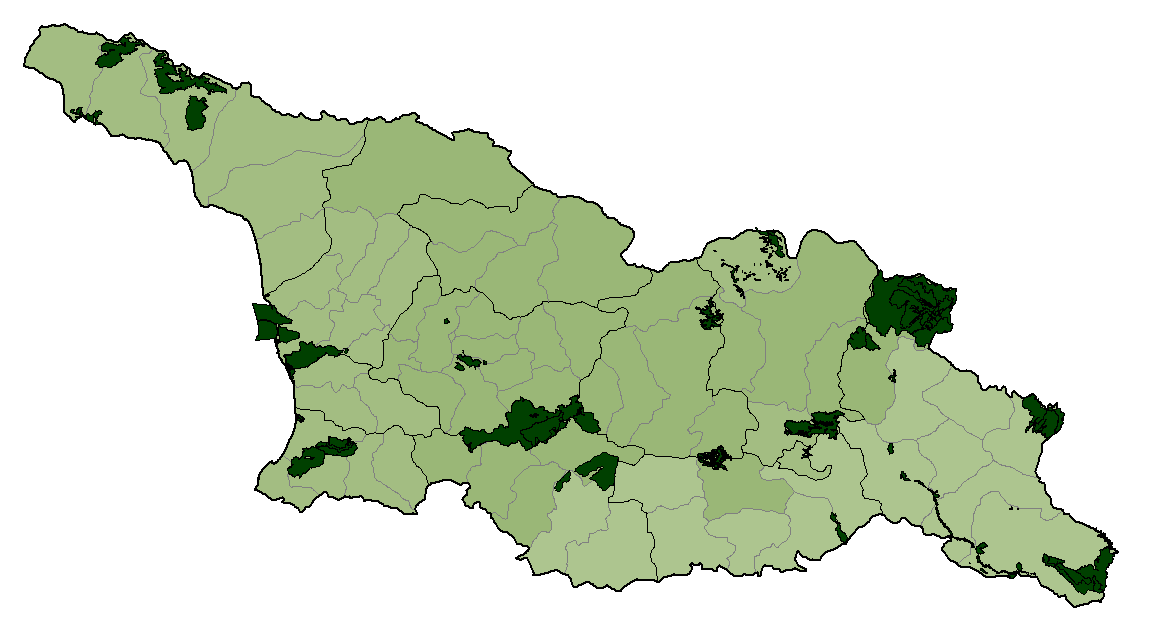
Distribution: All regions of Georgia (5).
Uses
Edibility: Edible when young, fresh and dry (1).
Khevi — “Jimla is a small, but tasty mushroom, which grows in lines and rows, side-by-side, often in rainy weather”. “Jimlovana — is a pie with mushroom stuffing” (3). “Usually, there is a several ways to cooking Jimla, some are boil them, some are fry them and some make a pie with mushroom stuffing, like khachapuri — which is called Jimlovana” (6). Tusheti — “Very tasty mushrooms, we dry them for winter” (4).
References
- Nakhutsrishvili, I.G. (2007) Fungi of Georgia. Tbilisi: Buneba Printi.
- Makashvili, A. (1991) Botanical Dictionary. Tbilisi: Metsniereba.
- Ghudushauri, I. (2011) Dictionary of the Mokhevian Dialect. Tbilisi.
- Asabashvili, P. (2014) Vlg. Omalo, Tusheti.
- Nakhutsrishvili, I.G., et al. (1986) Flora of Spore-producing Plants of Georgia (Summary). Tbilisi: Metsniereba (Russian).
- Pitskhelauri, G. (2015) Stepantsminda, Kazbegi.