Local Name
Q’viteli pach’ich’a (1).
Description
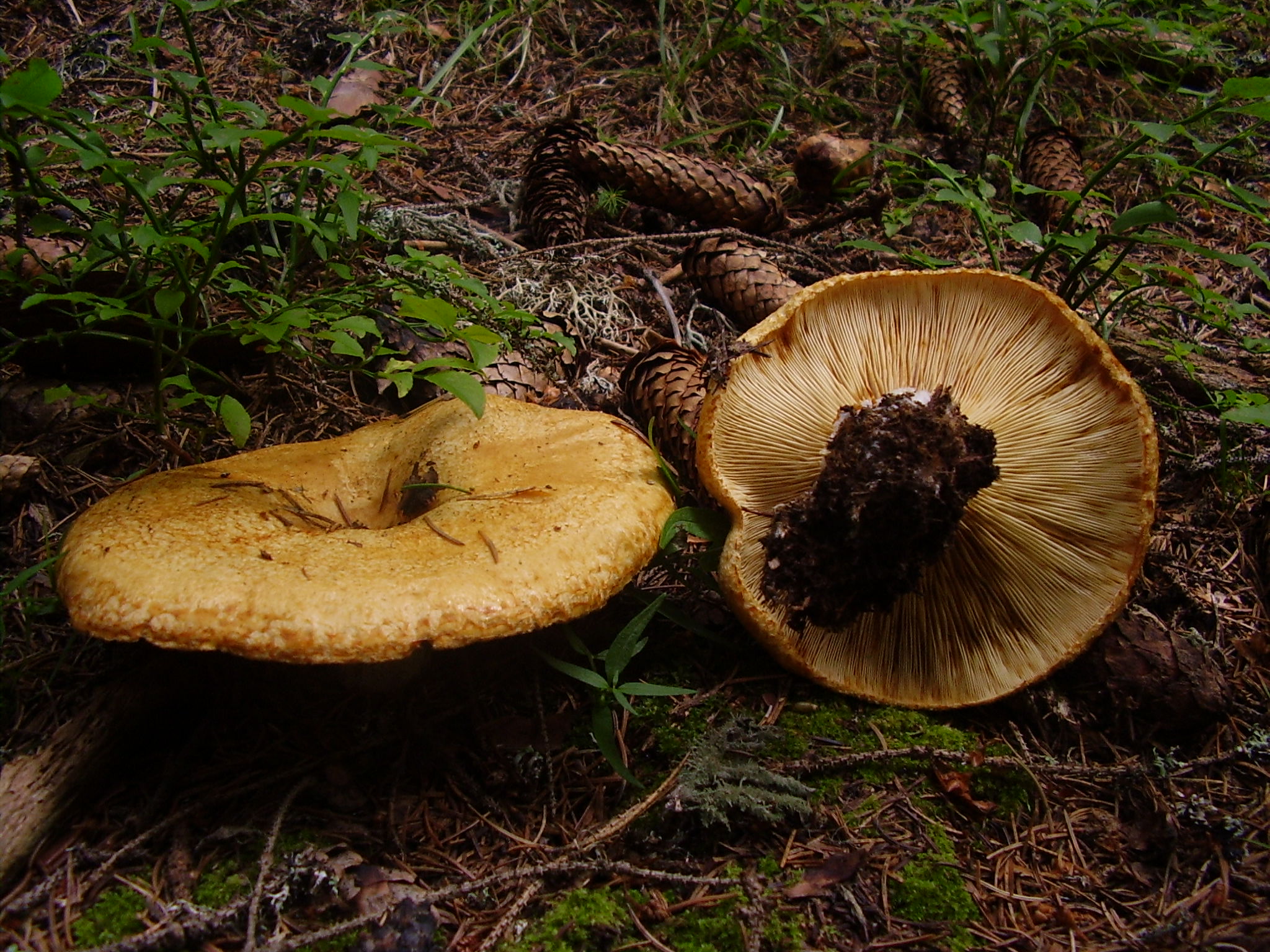
Cap: The cap is 7–20 cm, broadly convex with an inrolled and bearded margin when young, becoming shallowly vase-shaped, with the margin uplifted and smoother, slimy when young, but soon dry, covered with fibers that may darken to brownish, the fibers remaining visible in maturity, whitish at first, becoming olive buff or yellowish in age. Gills are beginning to run down the stem, crowded, often forking near the stem, whitish, bruising or staining yellowish to pale brownish. Stem: The stem is 3–9 cm tall, 1.5–4 cm thick, equal, with many glazed, yellowish or brownish potholes, whitish, bruising and discoloring yellowish or brownish. Flesh: The flesh is whitish or pale cream, firm. Milk white, promptly turning yellow on exposure to air, scanty. Spores: The spores are 7–8 X 6–7 µm, ellipsoid.
Habitat: On soils, in mixed woodland, both in leafy and coniferous forests. Season: Summer, autumn.
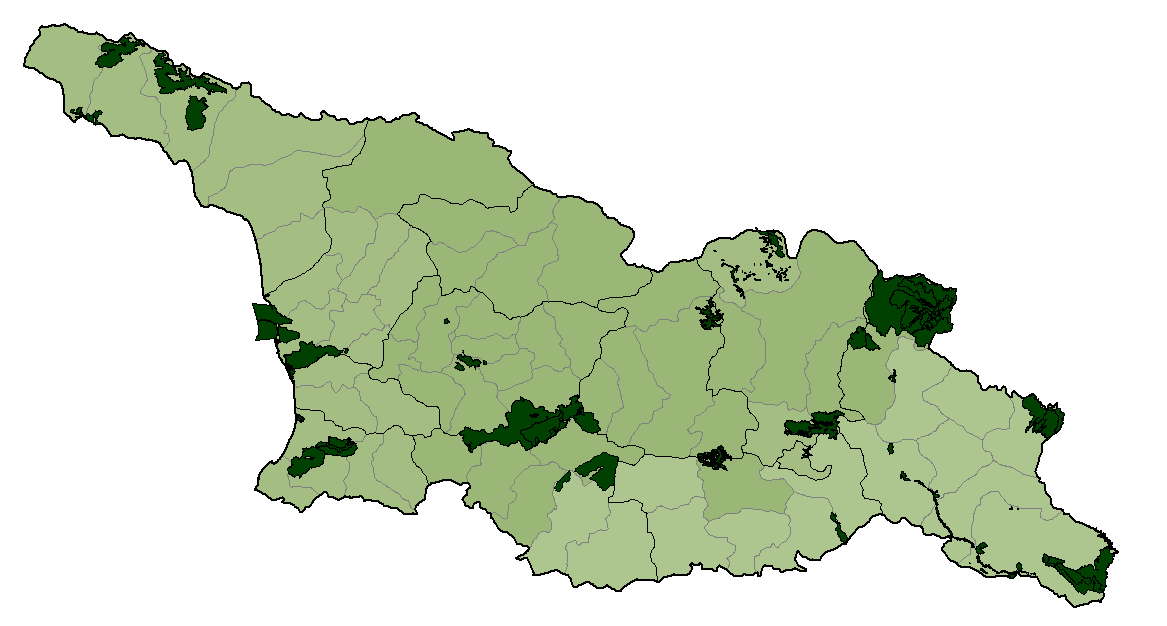
Distribution: All regions of Georgia (2).
Uses
Edibility: Edible when marinated (must be boiled first) (1).
References
- Nakhutsrishvili, I.G. (2007) Fungi of Georgia. Tbilisi: Buneba Printi.
- Nakhutsrishvili, I.G., et al. (1986) Flora of Spore-producing Plants of Georgia (Summary). Tbilisi: Metsniereba (Russian).