Local Name
Manch’k’valas mat’q’uara (1), (2), Mach’k’unaras matsilobela (rach.) (3).
Description
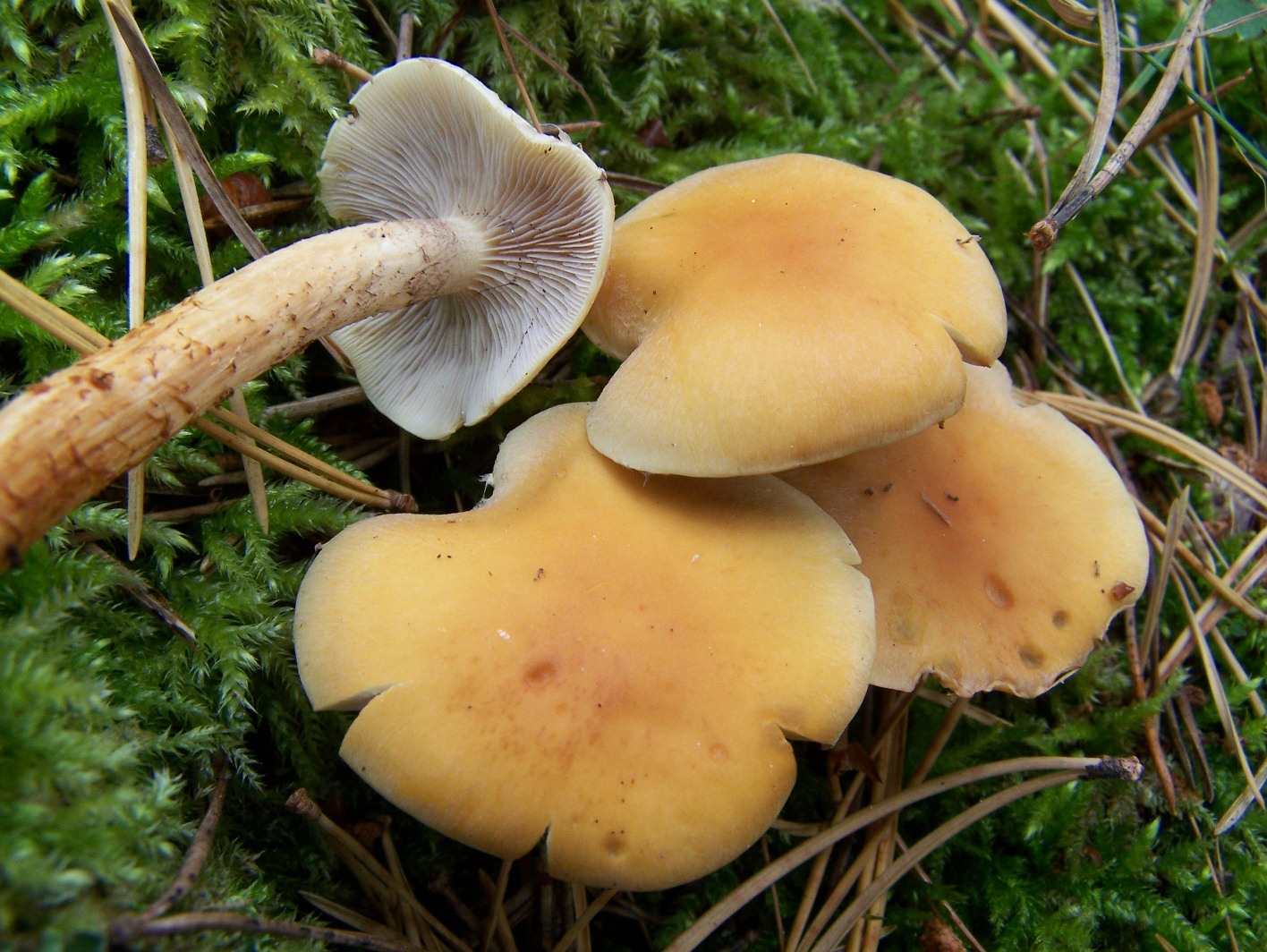
Cap: The cap is 2–7 cm; convex, becoming broadly convex or nearly flat, bald, dry, when young often tawny reddish brown or orange, but usually becoming bright yellow to greenish yellow or golden yellow, with a darker center; the margin often featuring small, wispy partial veil fragments. Gills are attached to the stem or pulling away from it, close or crowded, yellow, becoming olive or greenish yellow, and eventually dusted with spores and therefore spotted purplish brown to blackish, short-gills frequent. Stem: The stem is 3–10 cm tall, 0.3–1 cm thick, more or less equal, or tapering to base, bright yellow to tawny, developing rusty brown stains from the base upwards. Flesh: The flesh is thin, whitish-yellowish or pale yellow, odor not distinctive, taste bitter. Spores: The spores are 5–7.5 X 3.5–5 µm, elliptical, smooth.
Habitat: Growing in clusters on decaying logs and stumps of conifers and, sometimes, hardwoods. Season: Summer, autumn.
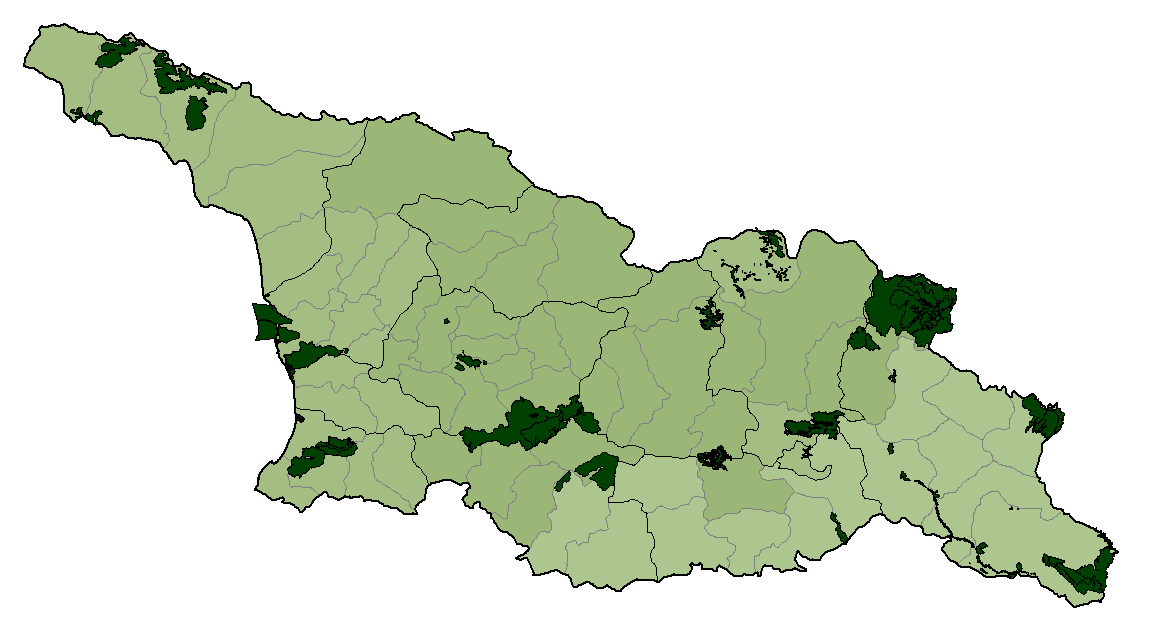
Distribution: All regions of Georgia (4).
Uses
Edibility: Considered as poisonous (1).
Racha — “Mach’k’unaras matsilobela is like Manch’k’vala mushroom, but non edible, unhealthy” (3).
References
- Nakhutsrishvili, I.G. (2007) Fungi of Georgia. Tbilisi: Buneba Printi.
- Makashvili, A. (1991) Botanical Dictionary. Tbilisi: Metsniereba.
- Kobakhidze, A. (1987) Dictionary of the Rachan Dialect. Tbilisi: Metsniereba.
- Nakhutsrishvili, I.G., et al. (1986) Flora of Spore-producing Plants of Georgia (Summary). Tbilisi: Metsniereba (Russian).