Local Name
Gvidzla sok’o (1), Khortsa sok’o (rach.) (2), Khbos khortsai (rach.) (3).
Description
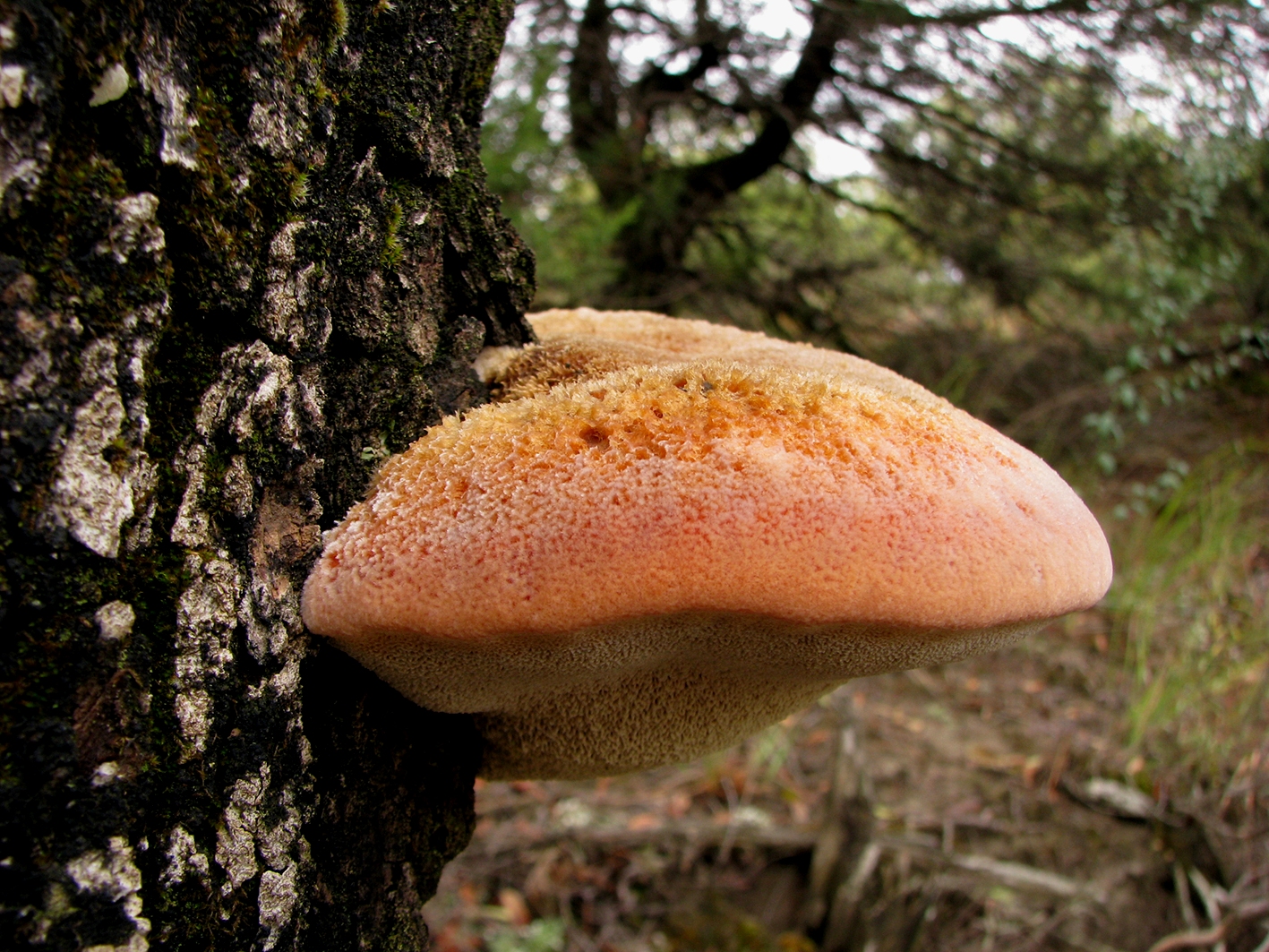
Bracket: The bracket is 8–25 cm across, 2–6 cm thick, usually single, tongue-shaped or semicircular, upper surface pinkish to orange-red and finally purple-brown, rough with rudimentary pores, especially toward the margin, moist to tacky. Tubes up to 15mm deep, arising free, but adhering in maturity, whitish or yellowish. Pores 3 per mm, circular, whitish at first, bruising reddish brown. Stem none or rudimentary, short, thick, blood red. Flesh: The flesh is thick, succulent, mottled, dark flesh-pink with lighter veining, with bloodlike sap, reminiscent of raw meat, odor pleasant, taste sourish. Spores: The spores are ovoid, smooth, light brown, 4.5–6 X 3–4 µm.
Habitat: Singly or sometimes several in a cluster on the base of living oaks or chestnuts, sometimes on beech, also dead hardwood stumps. Season: Summer, autumn.
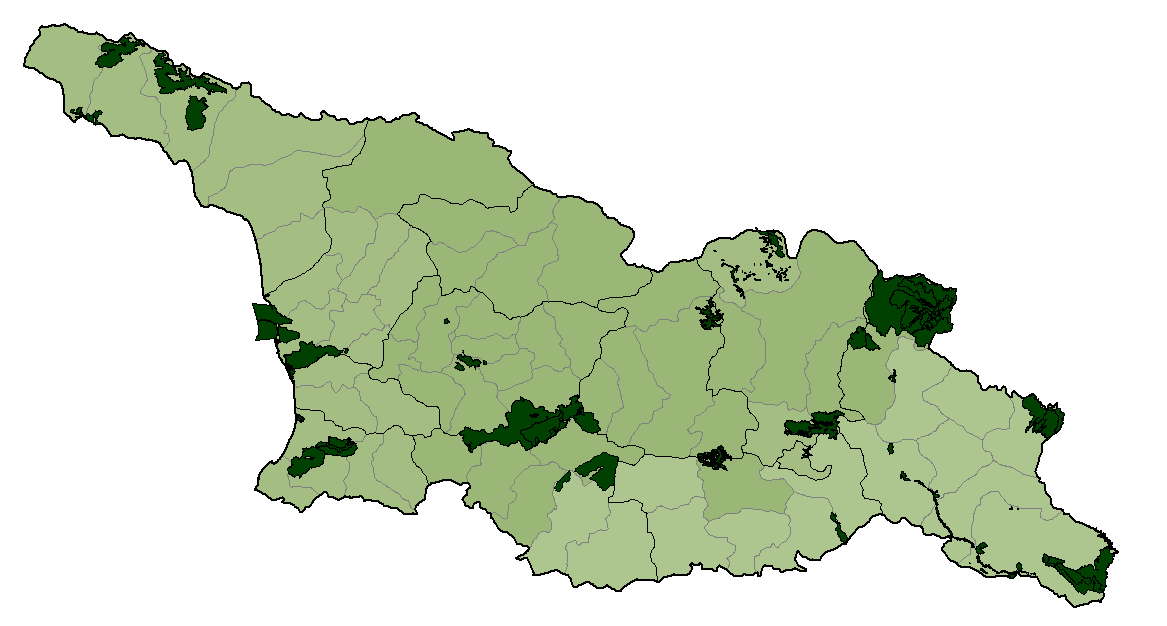
Distribution: All regions of Georgia (4).
Uses
Edibility: Edible when young and fresh (1).
Racha — “In one’s childhood my grandmother used to gather these fungi. When they are cleaved or cut — it is possible to see the covering process of the fungi flesh by the red dew and thus it’s really like a veal, usually it’s quite hard to find them but here — it is still consider as the tastiest fungi” (3).
References
- Nakhutsrishvili, I.G. (2007) Fungi of Georgia. Tbilisi: Buneba Printi.
- Darakhvelidze, I. (2014) Vlg. Ghviara, Ambrolauri.
- Melashvili, N. (2014) Vlg. Uravi, Ambrolauri.
- Nakhutsrishvili, I.G., et al. (1986) Flora of Spore-producing Plants of Georgia (Summary). Tbilisi: Metsniereba (Russian).