Local Name
Miklio (1), Katambark’ala (rch’.), Katmibark’ala (rch’.), Katmis bark’ala (z.imer.) (1), Miklo (imer.) (2), Melak’uda (gur.) (3), Ch’eramula (k’akh.), Ch’erama (k’akh.) (4), Katambark’ala (tush.) (5), Katmiskona (svan.) (6).
Description
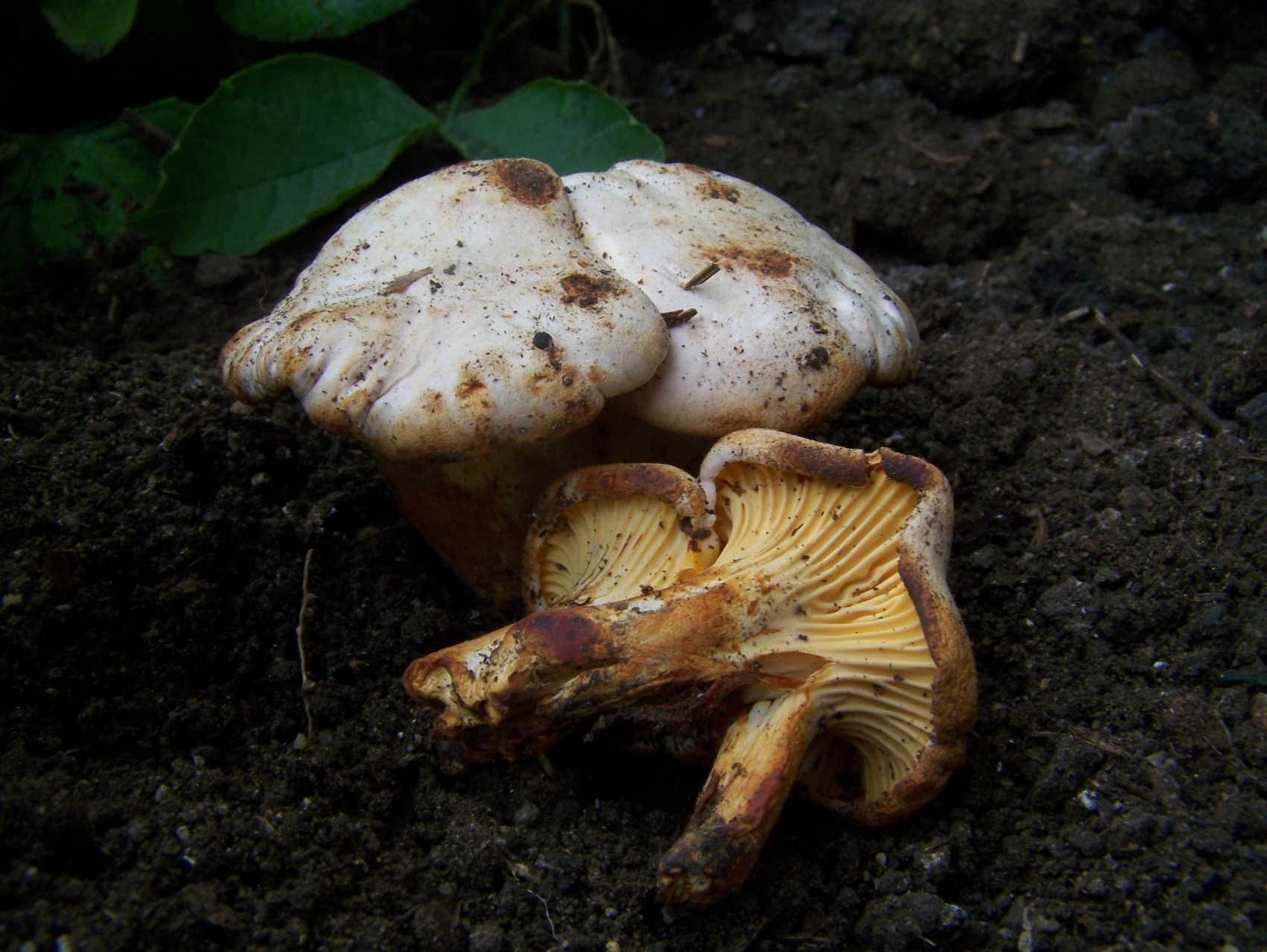
Fruitbody: The fruitbody is choanoid, 5 to 12 cm tall, Cap: The cap is 4–10 cm across, at first flattened with an irregular incurved margin later becoming wavy and lobed and depressed at the centre, pale to deep egg-yellow fading with age. Gills are narrow, vein-like, irregularly forked and decurrent, egg-yellow. Stem: The stem is 4–7 cm tall, 1–4 cm thick, solid, concolorous with cap or paler, tapering towards the base. Flesh: The flesh is yellowish, taste watery at first then slightly peppery, smell faint, fragrant (of apricots). Spores: The spores are 7–10 X 4–6 µm, elliptical, smooth, pale yellow to creamy white, sometimes with a slight pinkish tinge.
Habitat: In all kinds of woodland, often in groups, especially when the forest has plenty of moist, mossy undergrowth. Season: Summer, autumn.
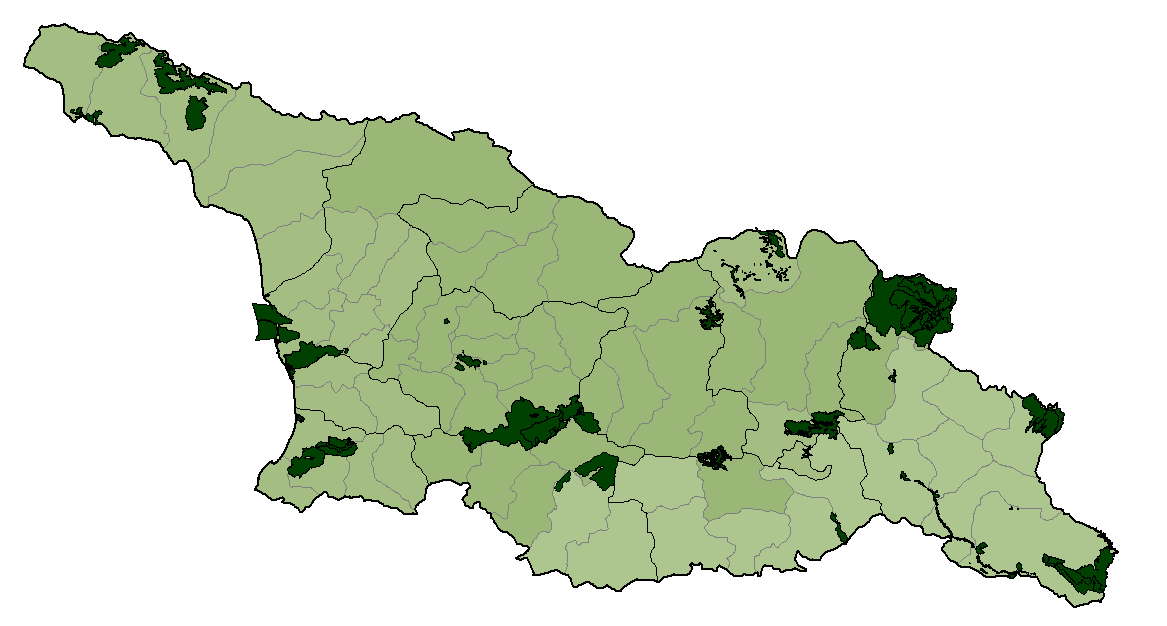
Distribution: All regions of Georgia (7).
Uses
One of the best edible fungi (7), they are drying them on the sun and keep in store for the winter (5).
References
- Makashvili, A. (1991) Botanical Dictionary. Tbilisi: Metsniereba.
- Ghlonti, A. (1974) Dictionary of the Georgian Dialects. Vol. I. Tbilisi: Ganatleba.
- Khukhunaishvili, T. (2016) Lanchkhuti.
- Sidonashvili, Z. (2015) Vlg. Ikalto, Telavi.
- Bakuradze, V. (2014) Vlg. Omalo, Tusheti.
- Gujejiani, Ch. (2014) Mestia.
- Nakhutsrishvili, I.G., et al. (1986) Flora of Spore-producing Plants of Georgia (Summary). Tbilisi: Metsniereba (Russian).