Local Name
Marts’q’vio (1).
Description
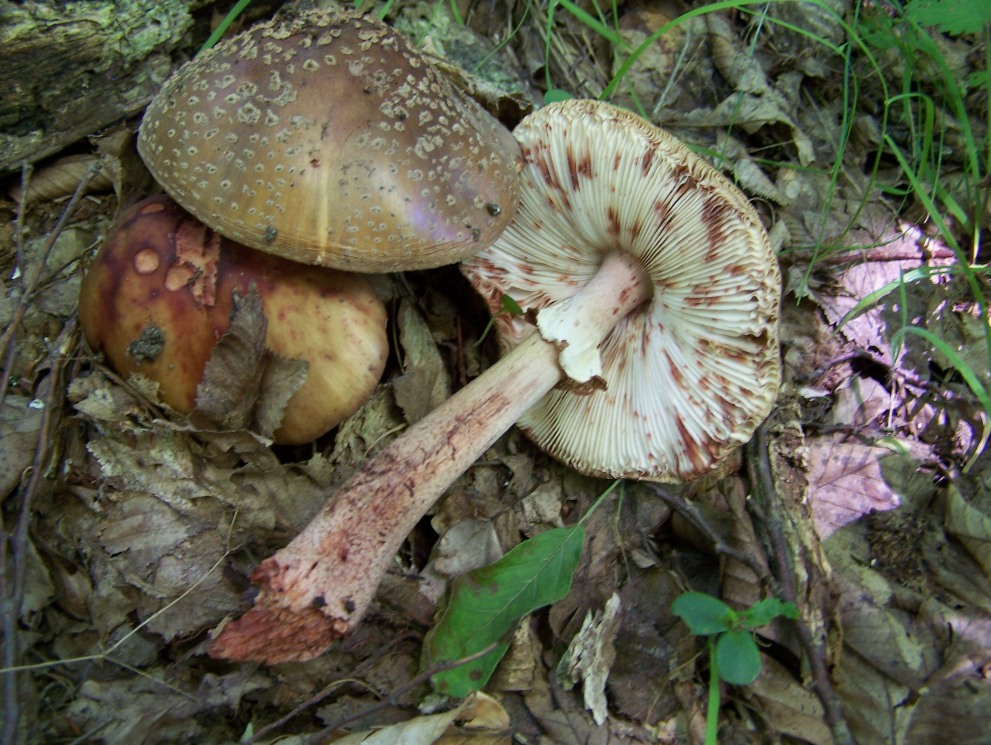
Cap: The cap is 5–15 cm across, convex, becoming broadly convex or flat, dry or slightly sticky, adorned with with numerous felty warts that are bright yellow and densely packed at first, but soon spread and fade, becoming pinkish, grayish or dull tan, surface dull brassy yellow to dull brown when young, becoming flushed with red shades, and eventually turning reddish brown to tan or brown, the margin typically not lined. Gills are free from the stem or or narrowly attached to it, white, sometimes discoloring reddish, close or crowded, short-gills numerous. Stem: The stem is 5–10 cm tall, 0.5–2 cm thick, more or less equal, or sometimes slightly enlarged toward base, the base indistinct to bulbous, generally without universal veil remnants, without a rim, white at first, becoming stained pinkish to dirty red, bald or finely hairy, with a fragile, persistent ring. Flesh: The flesh is white or whitish throughout, discoloring slowly pale pinkish red, especially around worm holes. Spores: The spores are 6–10.5 X 4–6.5 µm, broadly ellipsoid to subglobose, amyloid, colourless or pale white.
Habitat: On soils, in mixed coniferous and leafy forests. Season: Summer, autumn.
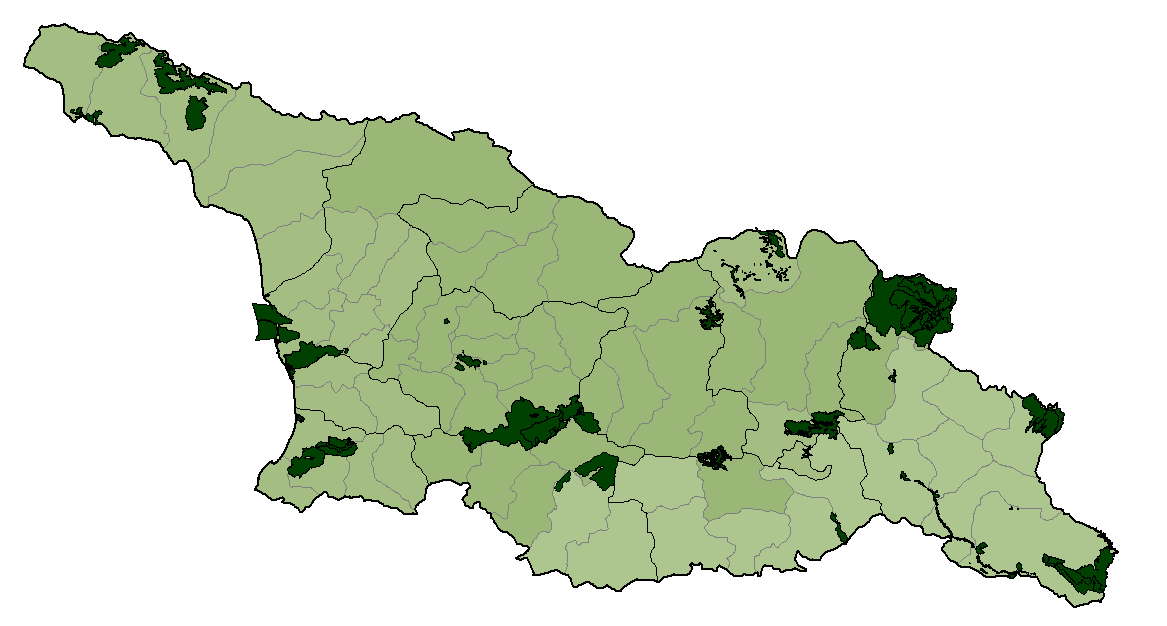
Distribution: All regions of Georgia (2).
Uses
Edibility: Edible when fresh (must be boiled first for at least 15-20 minutes) (1).
Imereti — “Usually we fry mushroom separately, but if the amount of them is too small — then we fry them also with other mushrooms” (3).
References
- Nakhutsrishvili, I.G. (2007) Fungi of Georgia. Tbilisi: Buneba Printi.
- Nakhutsrishvili, I.G., et al. (1986) Flora of Spore-producing Plants of Georgia (Summary). Tbilisi: Metsniereba (Russian).
- Tsartsidze, N. (2016) Vlg. Chashora, Sachkhere.