Local Name
Mdelos kama (1), Kama sok’o, Kama (imer.), Mindvris sok’o (gur.), Markvali (adjar.) (2), Nekhvis sok’o (3), Kamara sok’o (javakh.) (4).
Description
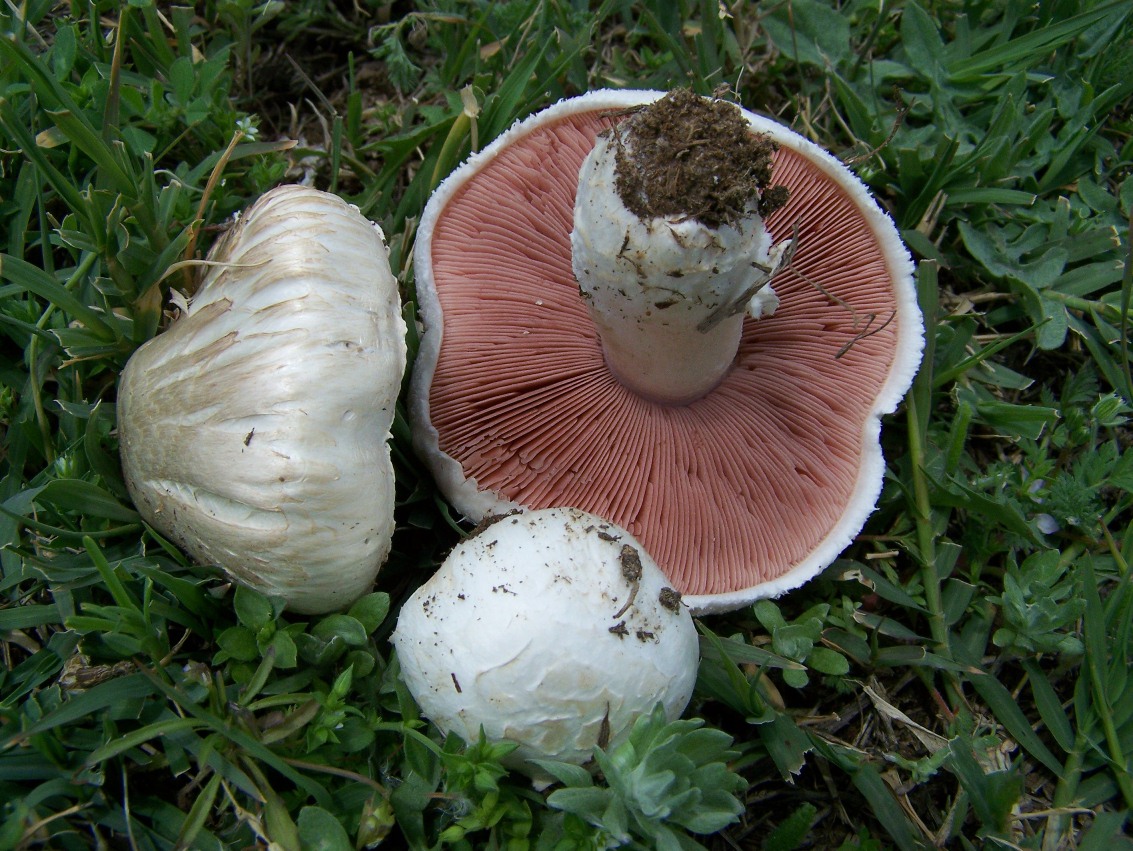
Cap: The cap is 5–12 cm across, convex to broadly convex, occasionally nearly flat, whitish, smooth and glossy to fibrous to nearly wooly or scaly. Gills are free from the stem, deep pink becoming brown and then dark chocolate brown in maturity, crowded. Stem: The stem is 3–10 cm tall, 1–2 cm thick, cylindrical, more or less equal, sometimes tapering slightly to base, with a quickly collapsing white ring, not bruising yellow. Flesh: The flesh is thick and white, rarely discoloring a pinkish wine color in wet weather. Spores: The spores are 5–9 X 4–6.5 µm, elliptic, brownish.
Habitat: On soils, in meadows, fields, lawns, and grassy areas (sometimes in fairy rings). Season: Spring, autumn.
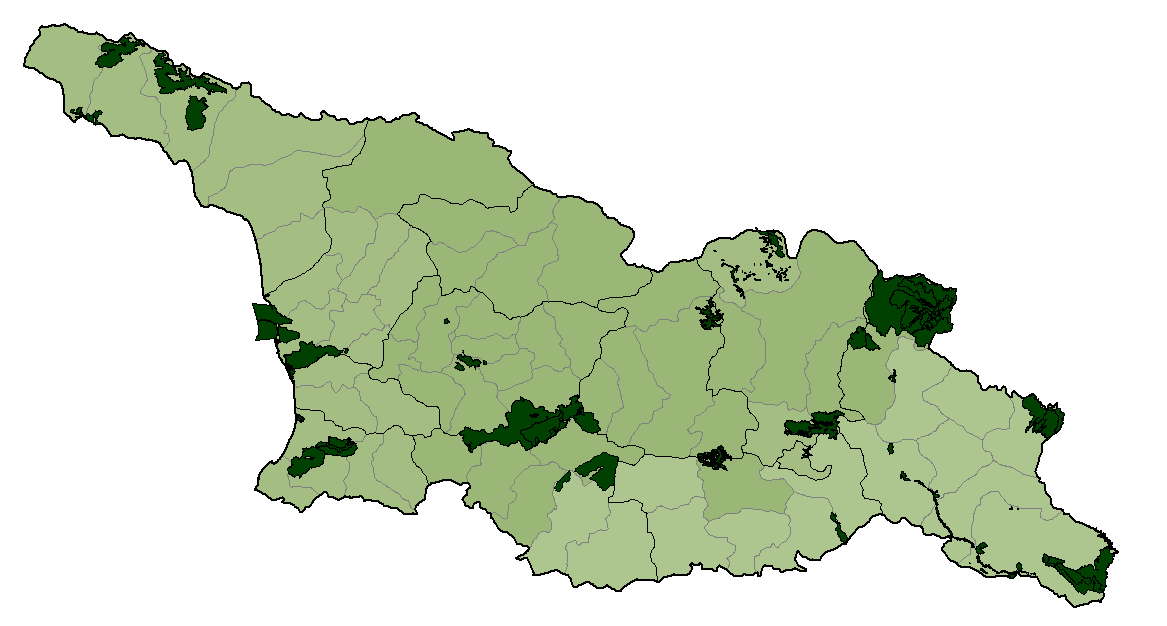
Distribution: All regions of Georgia (5).
Uses
Edibility: Edible when fresh (1).
Kazbegi — “I gather Kama on meadows, growing up – they are often making up some kind of lines or circles” (6). Kakheti — “Kama is called also “Chamadan gora”, in our region there is a large meadows, where we often gather these mushrooms” (7). Mestia — “When I was a kid, my mother used to gather these mushrooms on meadows, then she minced them and salted them with a special svanetian salt — to make thus the mince of kubdari” (8).
Note: Kama is well known and probably most popular and recognisable mushroom in all regions of Georgia.
References
- Nakhutsrishvili, I.G. (2007) Fungi of Georgia. Tbilisi: Buneba Printi.
- Makashvili, A. (1991) Botanical Dictionary. Tbilisi: Metsniereba.
- Orbeliani, Sulkhan-Saba (1991) Georgian Dictionary. Tbilisi: Merani.
- Zedginidze, G. (2014) Javakhian Dictionary. Tbilisi: Saunje.
- Nakhutsrishvili, I.G., et al. (1986) Flora of Spore-producing Plants of Georgia (Summary). Tbilisi: Metsniereba (Russian).
- Narozauli, S. (2015) Vlg. Arsha, Kazbegi.
- Gonashvili, B. (2016) Dedoplistskaro.
- Gujejiani, Ch. (2014) Mestia.