Local Name
Dumasok’o (1).
Description
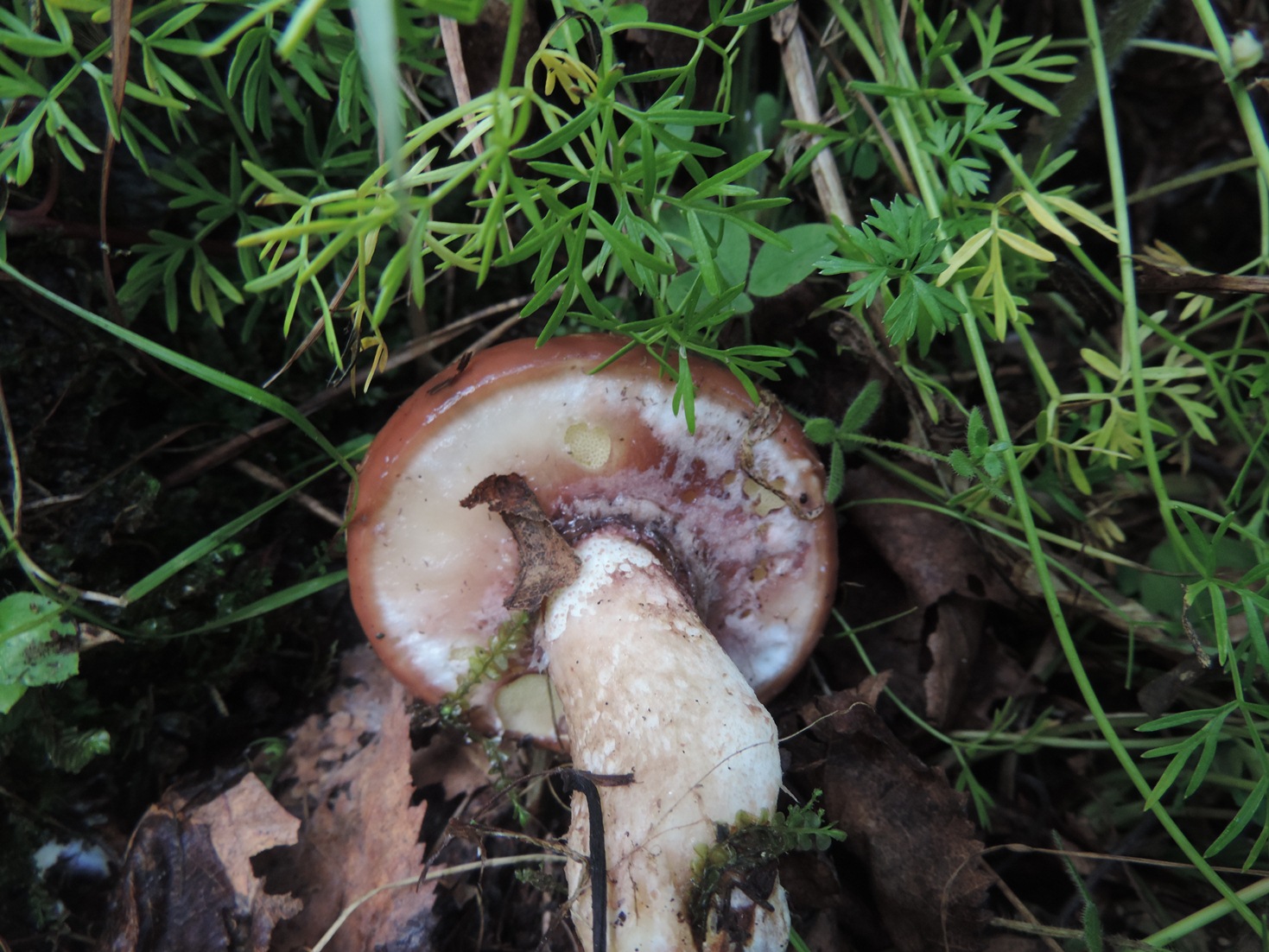
Cap: The cap is 3–14 cm, convex when young, becoming broadly convex to flat, slimy, shiny when dry, partial veil tissue often hanging from the margin, dark brown to dark reddish brown to yellow brown, fading with age. Pore Surface: Covered with a whitish partial veil when young, whitish to pale yellow, becoming yellow to olive yellow with age, not bruising. Stem: The stem is 3–9 cm long, 1–2 cm thick, equal, with glandular dots above the ring, whitish, yellowish towards apex, discoloring brown to purplish brown near the base in age, with a flaring white ring that develops purple shades on the underside and is often gelatinous in humid or wet weather. Flesh: The flesh is thick, white to pale yellow, not staining on exposure. Spores: The spores are 6–10 X 3–3.5 µm, smooth, subfusiform, ochraceous or buff coloured.
Habitat: With various pines. Season: Spring, summer, autumn.
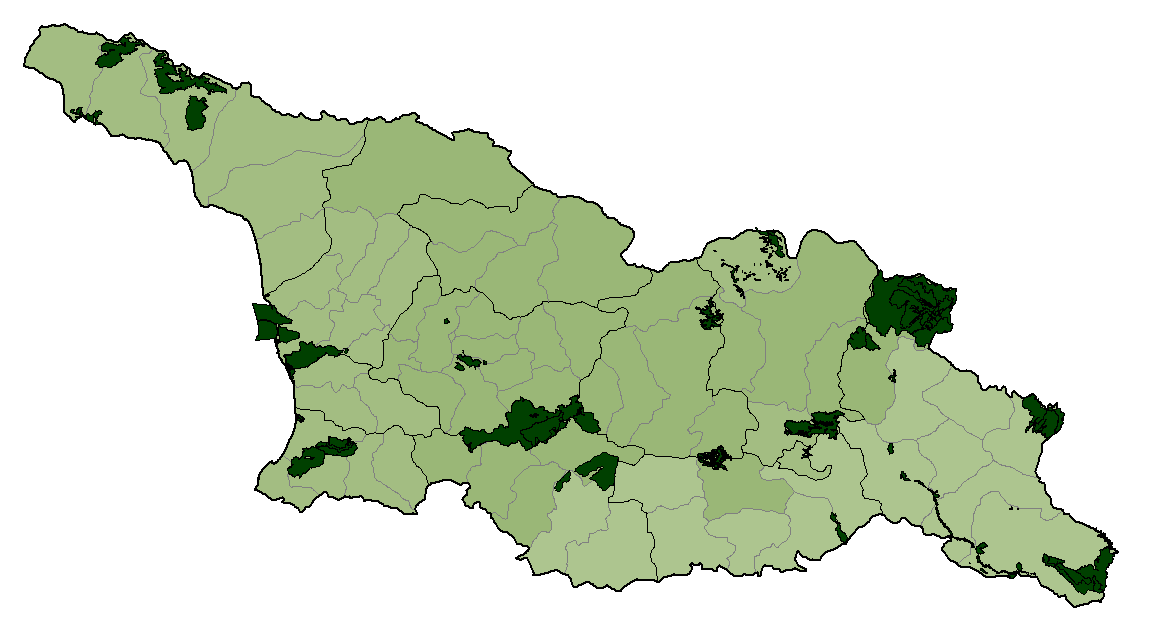
Distribution: All regions of Georgia (2).
Uses
Edibility: Edible when young, fresh and marinated (1).
Kartli — “We gather Duma sok’o in pine forests” (3).
Note: In Georgia rarely gather Duma sok’o, information about these mushrooms mainly came from Russian settlers and accordingly locals often call them Zeta or Masliata.
References
- Nakhutsrishvili, I.G. (2007) Fungi of Georgia. Tbilisi: Buneba Printi.
- Nakhutsrishvili, I.G., et al. (1986) Flora of Spore-producing Plants of Georgia (Summary). Tbilisi: Metsniereba (Russian).
- Modzghvrishvili, G. (2015) Vlg. Saguramo, Mtskheta.